
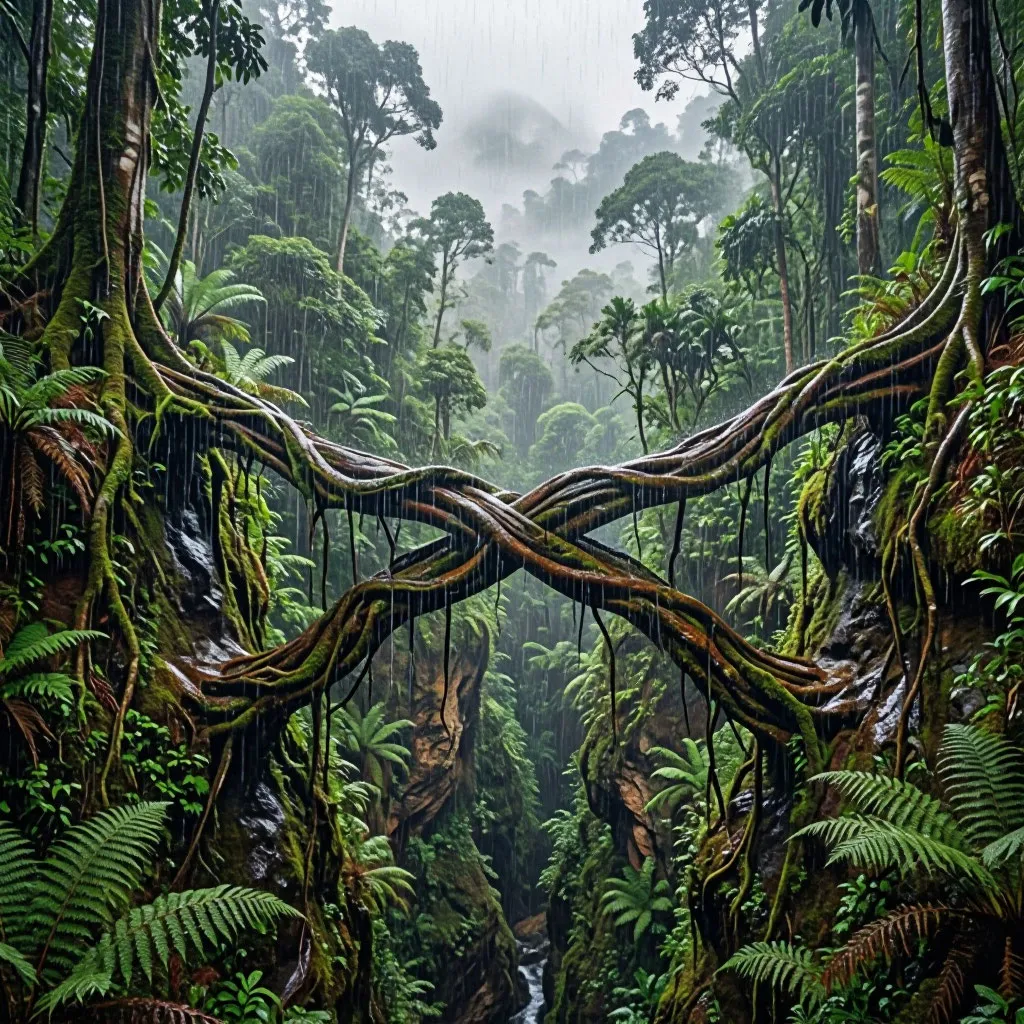
Deep within the wettest valleys on Earth, nature and human ingenuity have forged a partnership that defies modern engineering. The living root bridges Meghalaya is famous for are not built; they are grown over decades by the indigenous Khasi tribes using the aerial roots of the Ficus elastica tree. Among these organic wonders, the Nongriat double decker bridge stands as the ultimate testament to this ancient craft, drawing travelers from across the globe to the misty hills of northeast India. Walking through these ancient forests feels like stepping into a prehistoric world where the boundaries between the living environment and human infrastructure completely dissolve.
The legendary path to Nongriat village
Reaching this secluded paradise requires physical endurance and a spirit of adventure, as no roads lead directly to the iconic structures. The journey begins at the small village of Tyrna, from which a steep concrete path plunges into the deep river canyon. Navigating this trail is a test of stamina, demanding that hikers conquer a grueling descent down roughly 3,500 concrete and stone stairs cutting through dense subtropical foliage. Along the way, the humid air is filled with the sounds of rushing water, buzzing insects, and the calls of exotic birds, making the descent feel like a deep dive into an untouched ecosystem.
To help you visualize the journey down into the valley, we have broken down the primary landmarks you will encounter during this steep descent.
- Tyrna village: the starting point of the trek where you can hire local guides and purchase bamboo walking sticks.
- The single root bridge: a stunning, lesser-known living structure that serves as a preview of the engineering marvels ahead.
- The wire suspension bridges: two narrow, swinging metal bridges spanning roaring turquoise rivers that test your balance and nerve.
- Nongriat village: the quiet, forest-enveloped settlement that serves as the base for exploring the double-tier masterpiece.
These waypoints offer natural resting spots where hikers can catch their breath, chat with friendly locals, and appreciate how the remote terrain has kept this region pristine. Passing these milestones builds anticipation, transforming a demanding physical workout into a deeply rewarding pilgrimage through the Khasi hills.
Choosing the perfect time for your adventure
Planning a trip to Cherrapunji, one of the wettest places on Earth, requires careful consideration of the weather patterns. The experience of trekking through this lush landscape changes dramatically depending on the month you choose to visit. While some travelers seek the dramatic, rain-soaked landscapes of the wet months, others prefer the safer, more predictable paths of the colder period.
Understanding the seasonal differences will help you decide when to embark on this challenging hike and what kind of environment to expect upon arrival.
| Parameter | Monsoon season (June to September) | Dry and winter season (October to May) |
|---|---|---|
| Trail conditions | slippery: wet steps and mud | dry: stable footing and clear paths |
| River volume | raging: powerful, muddy torrents | calm: crystal-clear turquoise pools |
| Humidity levels | high: intense moisture and heat | moderate: cool breezes and comfortable air |
| Insect activity | peak: active leeches and mosquitoes | low: minimal pests along the trail |
This comparison highlights how the monsoon turns the valley into a roaring, vibrant rainforest, though it demands excellent physical fitness and careful footwork. Conversely, the dry winter months offer a much friendlier environment for casual hikers, with stable pathways and inviting natural pools that are perfect for a post-trek swim.
What to pack for the Meghalaya eco tourism trail
A successful trek to the Nongriat double decker bridge relies heavily on smart preparation and packing light. Because every item you bring down must eventually be carried back up those thousands of grueling steps, experienced hikers emphasize minimalism. The damp environment of the canyon also means that cotton and heavy fabrics should be avoided in favor of quick-drying synthetics.
We have compiled a list of the absolute essentials you should slip into your daypack before leaving your main luggage behind in Cherrapunji.
- Sturdy hiking shoes: footwear with deep grip is essential to navigate the damp, moss-covered stone steps safely.
- Reusable water bottle: staying hydrated is crucial, and you can easily refill your bottle with filtered water at local homestays.
- Salt or insect repellent: a small bag of salt is highly effective at detaching the leeches that thrive in the damp leaf litter.
- Lightweight rain jacket: sudden downpours are common year-round in this region, making waterproof outer layers a necessity.
- Quick-dry clothing: garments made of polyester or nylon will keep you comfortable and dry much faster than heavy cotton fabrics.
Carrying these specific items ensures you remain comfortable, dry, and protected against the elements without weighing yourself down on the steep ascents. By keeping your pack light, you preserve your energy for the magnificent sights and the physical demands of the trail.
Staying overnight in the heart of the jungle
While some visitors attempt to complete the trek to the double-tier bridge as a day trip, staying overnight in Nongriat village offers a far richer experience. When the day-trippers leave in the late afternoon, a profound tranquility settles over the valley. The local community has embraced sustainable Meghalaya eco tourism, offering several rustic homestays where travelers can experience genuine Khasi hospitality. These accommodations are simple, offering basic amenities: clean beds, mosquito nets, shared bucket-bathrooms, and home-cooked vegetarian meals prepared with local ingredients.
Sleeping in the valley allows you to wake up early and enjoy the bridges in complete solitude before the midday crowds arrive. It also gives you the time to explore further into the jungle, such as trekking another hour to the breathtaking Rainbow Falls, where the water crashes onto giant boulders, creating perpetual rainbows in the sunlight. Supporting these community-run homestays directly contributes to the preservation of the local environment and ensures that the funds from tourism go directly to the families who protect these living wonders.
Embracing the slow rhythm of the living forest
An excursion to the living root bridges Meghalaya treasures is more than just a typical hike; it is an immersion into a lifestyle that respects the natural pace of the earth. These bridges take decades to grow, requiring generations of care and patience from the people of Nongriat. As you complete the climb back up to Tyrna, the physical exhaustion is accompanied by a deep appreciation for the wisdom of indigenous architecture. By traveling responsibly, minimizing plastic waste, and respecting local customs, visitors can help ensure that these magnificent living structures continue to thrive for generations to come.