
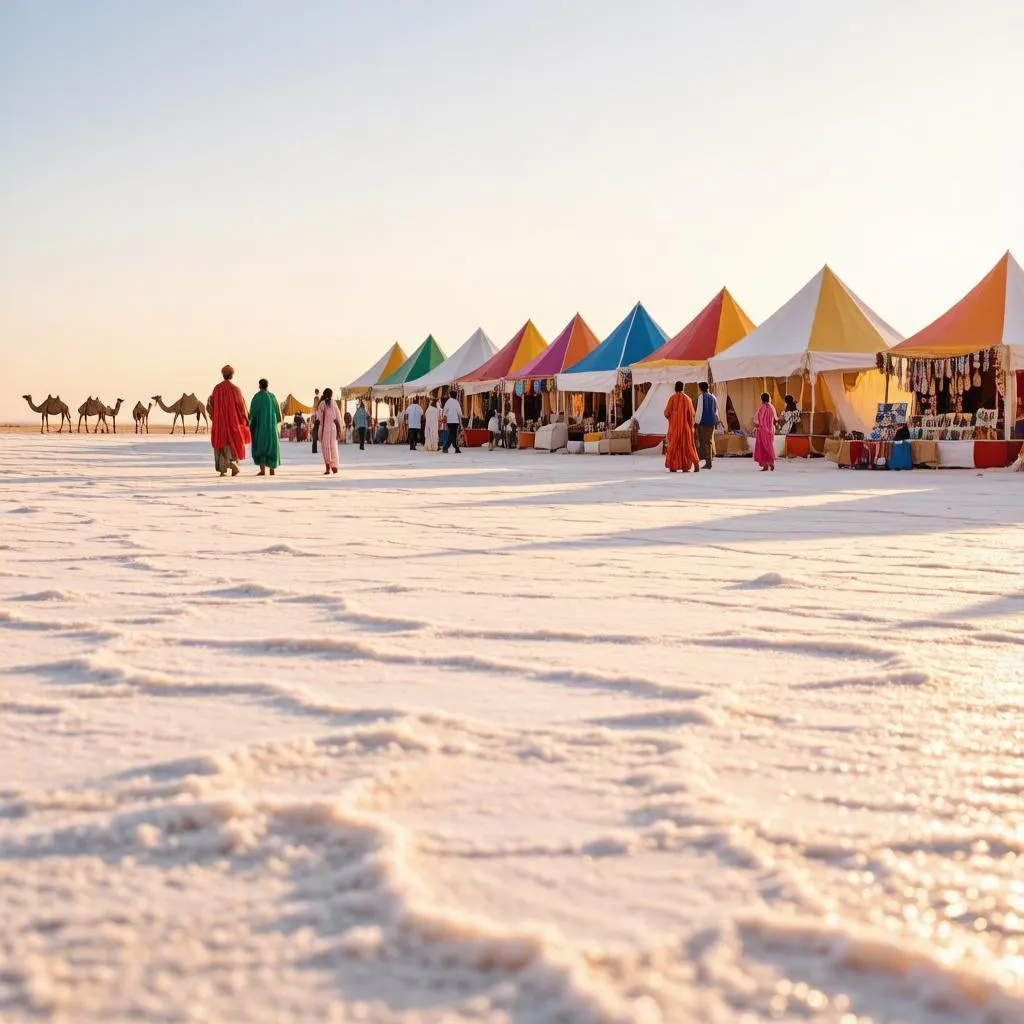
There is a moment on the White Rann that travelers describe the same way no matter when they visited it: the salt stretching white to the horizon, moonlight turning the desert into a sheet of silver, and the strange sensation of standing somewhere that has no landmarks at all. For four months every winter, that landscape becomes the stage of Rann Utsav, Gujarat’s flagship cultural festival, built around a temporary tent city at Dhordo on the edge of the Great Rann of Kutch. The 2026–27 season has been confirmed for 1 November 2026 through 7 March 2027 — a full four-month run, the longest form the festival has taken in recent years. What makes planning this trip genuinely different from most Indian destinations is the clock: the tent city exists for the season and is dismantled in March, the best nights sell out months ahead, and the difference between a magical visit and a mediocre one is almost entirely a matter of which dates you choose. This guide covers the whole decision chain — the season calendar and its peak nights, what the festival actually offers, the experiences beyond the salt flats, the package options, and how booking works in practice.
The 2026–27 season at a glance
The official season runs from 1 November 2026 to 7 March 2027, with the festival centered at Rann Utsav – The Tent City in Dhordo, roughly 80 km north of Bhuj in the Kutch district of Gujarat. Within those four months, the character of the experience shifts noticeably, and the shift follows three variables: the full moon cycle, the holiday calendar and the state of the salt.
| Period | Season phase | What defines it |
|---|---|---|
| 1–14 November 2026 | Opening fortnight | Quietest weeks; standing water on the flats sometimes creates mirror-effect photos |
| 8–14 November | Diwali week | Festive programming around the holiday; moderate crowds |
| 22–25 November | Full moon window | The season’s first full moon (24 November); easy availability |
| 18 December – 2 January | Christmas and New Year | Peak of peaks: the December full moon (24 December) coincides with the holidays; highest tariffs, sold out months ahead |
| 14–26 January 2027 | Uttarayan and Republic Day | Kite festival (14 January), full moon 20–23 January, second demand surge of the season |
| 18–21 February 2027 | Late-season full moon | Dry, bright salt, thinner crowds — the best value full moon of the season |
| 1–7 March 2027 | Season finale | Final week before the Tent City closes for the year |
The table’s core insight is that “best time to visit” has three different answers depending on what you value. Photographers chasing the mirror effect should look at early November, when post-monsoon water still stands on the flats. Travelers who want the full moon at its brightest and the desert at its whitest should aim for late December through February. And value-conscious travelers who want the same moonlit salt without peak pricing should target the November or February full moons — the experience is the same, the crowds and tariffs are not.
Full moon nights: why the dates matter so much
The full moon is the festival’s signature experience. On those nights, the salt desert reflects moonlight across an unbroken white expanse, and visitors are taken out to the flats for moonlit gatherings with Kutchi folk music, food stalls and craft shopping under the open sky. The 2026–27 full moon calendar falls on 24 November, 24 December, 22 January and 21 February — four windows, each with a different crowd profile. The December full moon, landing in Christmas week, is the single most contested night of the season and typically books out three to four months in advance. The January and February full moons offer nearly identical experiences with far less competition, which makes them the practical choice for anyone booking after the autumn rush.
One practical note about moonlight: the festival site is illuminated, and the evening salt-flat visits happen under floodlights as well as moonlight — so the full moon enhances rather than enables the experience. If your dates miss a full moon entirely, the desert is still open for visits on any night of the season; what you lose is the classic silver expanse, and what you keep is everything else the festival offers.
What the festival actually is: the Tent City and its rhythm
Rann Utsav is not a single event but an ecosystem: a purpose-built Tent City that assembles each October at Dhordo and comes apart each March, containing hundreds of tents and bhungas (traditional Kutchi circular mud dwellings), dining halls, a craft bazaar, an adventure zone, spa facilities and a nightly cultural program. Days follow a fixed rhythm — check-in at 12:30, lunch, an afternoon of activities, and the highlight: the evening departure to the salt flats for sunset, followed by the moonlit hours on the Rann. Mornings offer optional sightseeing excursions to the craft villages, temples and museums of the Kutch mainland.
The experiences that define a good visit:
- Sunset and moonlight on the White Rann — the non-negotiable core of any visit. The evening transfer to the salt flats, the sunset against a flat white horizon and the music-and-moonlight gatherings afterward are the reason the festival exists.
- Kutchi folk arts, live — evening performances of local music and dance forms, with the program changing nightly and peaking during the holiday weeks.
- The craft bazaar and the villages — Kutch is one of India’s great textile and craft regions: bandhani tie-dye, Rogan art from Nirona, Ajrakh block printing, Kutchi embroidery from the pastoral communities. Shopping at the Tent City bazaar is convenient; day excursions to the producing villages are more meaningful and often better priced.
- Kalo Dungar (Black Hill) — the highest point in Kutch, offering a panoramic view over the Rann, typically combined into day excursions.
- Dholavira — a UNESCO-listed Harappan city site with its own salt-desert character, reachable as an extended excursion or through the separate Dholavira tent accommodation that some package operators offer.
- Adventure and leisure activities — camel rides on the salt, paramotoring in some seasons, cycling, a spa, and the family-oriented activity zones that make the festival work well for travelers with children.
The list’s honest lesson is that the Rann is a base, not a destination in itself: two nights covers the salt, the shows and the bazaar comfortably, while every additional night earns its keep through the villages, the hill and Dholavira. That is exactly why the packages below are structured in three lengths.
Packages and tents: what you actually book
Rann Utsav is booked almost exclusively through package stays, since the Tent City exists only for festival guests. The package names recur every season and correspond to stay length; within each, the tent category determines the price band.
| Package | Duration | What it covers | Best for |
|---|---|---|---|
| Chandni | 1 night / 2 days | One evening on the Rann, breakfast and dinner, cultural program | Quick weekend visits; travelers combining Kutch with a longer Gujarat trip |
| Safar | 2 nights / 3 days | Two Rann evenings, one full excursion day, all meals | The standard recommendation for first-time visitors |
| Virasat | 3 nights / 4 days | Three Rann evenings, two excursion days, all meals | Travelers wanting the craft villages, Kalo Dungar and Dholavira in one trip |
| Room-only options | Flexible | Stay without the full package program | Repeat visitors who want the salt and the shows without structured excursions |
Pricing runs roughly from ₹6,300 per person for basic tent categories on the shortest packages to ₹9,500 and above per person for premium tents and suites, with single occupancy charged at a premium — around 75% above the double rate — and children under six typically staying free. The tent categories climb from standard tents through AC Swiss cottages to premium tents and the Rajwadi and Darbari suites, and the honest advice is that the mid-range categories deliver most of the comfort upgrade: December nights in Kutch are genuinely cold, and heating quality, not decor, is what separates the price tiers.
How to book: the practical sequence
Booking Rann Utsav is straightforward but date-sensitive, and the sequence matters more than the platform. The working procedure:
- Choose your dates against the calendar above — full moon windows and Christmas week first, since they vanish earliest. As a rule, full moon nights need booking three to four months ahead, and any December–January date should be locked by late summer.
- Choose the package length before the tent category. The difference between a 1-night and a 3-night stay is the difference between seeing the Rann and seeing Kutch; decide how much of the region you want before deciding how soft your bed should be.
- Book through the official Tent City channels or authorized package operators — the official booking portal and phone lines handle direct reservations, and licensed travel operators sell the same inventory with transfer add-ons. Avoid third-party sellers offering prices well below the official range; the festival has a documented history of fraudulent resellers, and a package that cannot be verified against the official booking system is not a package.
- Note the transfer timings at booking. Complimentary group transfers run from Bhuj railway station and airport at fixed morning and afternoon slots — typically 8:15 a.m., 10:00 a.m., 1:30 p.m. and 3:30 p.m. — and no transfers operate after the last slot. Your train or flight into Bhuj should land with margin before one of them, or you pay for an individual transfer.
- Pay securely and keep the confirmation voucher — bookings are confirmed by email voucher, which serves as your check-in document at Dhordo. Bookings are accepted only for the season’s official window.
The step most travelers skip is the last practical one: reading the sightseeing schedule against your own dates. The Kutch Museum in Bhuj closes on Wednesdays and the Dholavira archaeological museum on Fridays, and excursion programs shift with weather and daylight — a two-night package that lands on the wrong weekdays can lose its museum visit entirely.
Getting there and moving around
Bhuj is the gateway for everything Kutch, and it is connected by daily flights from Mumbai and Ahmedabad, and by long-distance trains on the western railway network. From Bhuj, the Tent City at Dhordo is about 80 km — a two-hour drive through the flats landscape — and the festival’s transfer system is the standard way in. Private taxis from Bhuj are also available for flexible itineraries, and self-drive travelers should note that fuel and supplies thin out rapidly north of Bhuj: fill the tank and carry water. The nearest major rail junctions for travelers from Delhi and Mumbai are Bhuj and Gandhidham, and most visitors fly or train into one, road-transfer to the Rann, and reverse the route out.
Within the festival footprint, everything is shuttle-based: the Tent City, the salt-flat access point and the excursion departures all run on the festival’s own transport, which is why the fixed check-in and check-out times — 12:30 in, 9:30 out — are strict rather than soft. Plan your Bhuj connection around them, not the other way round.
Practical tips for the desert
Kutch in winter is a desert with real temperature swings: days in the mid-twenties Celsius, nights that can drop near single digits in December and January, and wind on the open flats that makes it feel colder still. Packing belongs in three layers — warm evening wear, sun protection for day excursions, and footwear that survives salt terrain. Phone batteries drain faster in the cold and there is little shade on the salt, so carry a power bank if photography is the point. Cash is useful in the craft bazaar and the villages, where card acceptance is patchy. And the standard advice for any desert night applies: the difference between enjoying the moonlight evening and enduring it is almost always the layer you did not bring.
For families, the festival is genuinely well-adapted — the enclosed Tent City, fixed meal times and activity zones give children structure that open-desert camping never could. For solo and couple travelers, the December full moon delivers the atmosphere at the price of crowds; for everyone else, the shoulder-season full moons deliver nearly the same magic with room to breathe.
Conclusion
Rann Utsav 2026–27 runs from 1 November 2026 to 7 March 2027, and the planning logic that turns it from an expensive weekend into a memorable one is simple: pick the moon cycle that matches your crowd tolerance, give the stay at least two nights so the villages get their chance, book the full moon windows early, and arrive in Bhuj with enough margin to make the fixed transfer times. The Tent City, the salt, the crafts and the music take care of the rest.
The White Rann is one of those places that rewards visitors who respect its calendar — a landscape that exists in its best form for only a few months, in a temporary city that disappears with the season. Book around the moon, pack for the cold, and let the desert do what four months of festival programming exist to deliver: a night on the edge of India that looks like nowhere else on the subcontinent.