
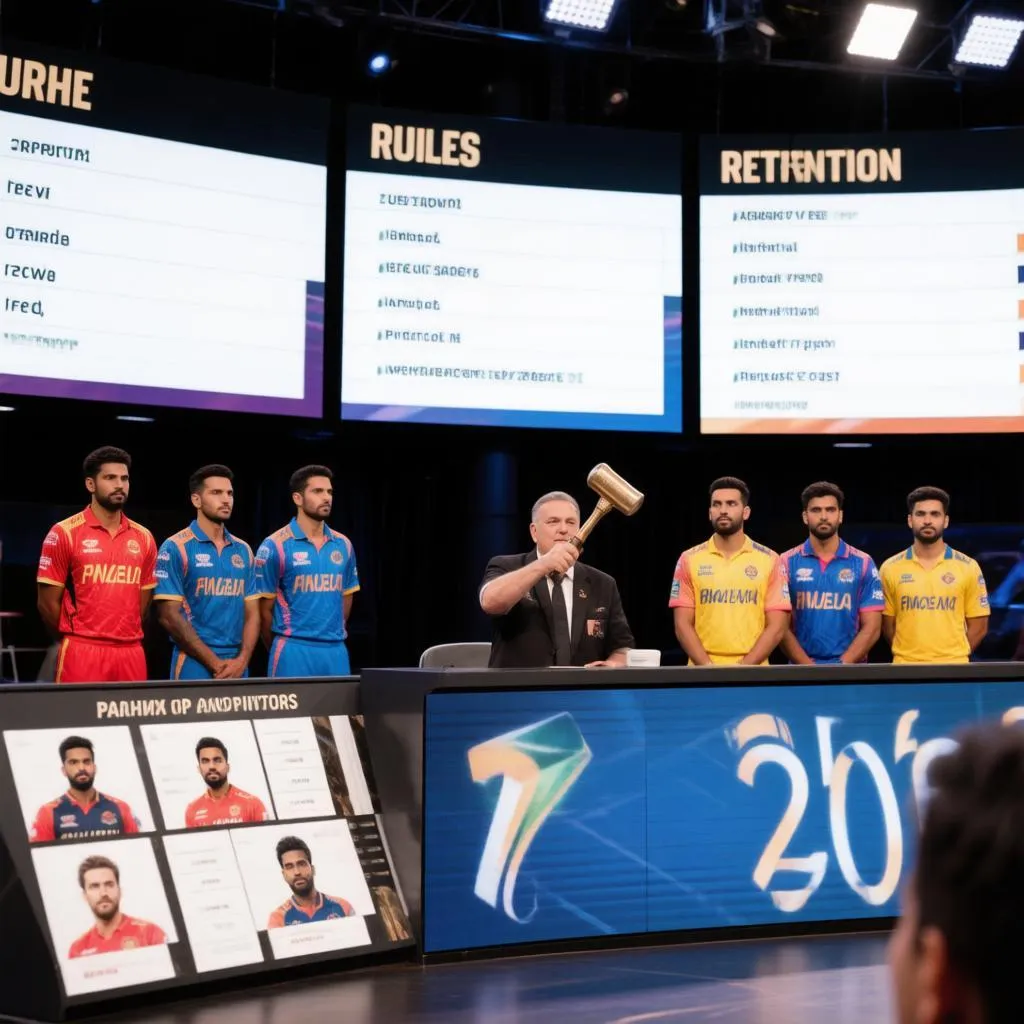
Every IPL auction begins the same way in the fan’s imagination — with a fantasy board of superstars and unlimited money — and ends the same way in reality: franchises fighting over utility players with a few lakh left in the purse, having spent their auction capital before the marquee names ever crossed the block. The 2027 edition, expected in December 2026 ahead of the new season, follows the shape the league has settled into since the 2025 mega auction reset the rosters: a mini auction, where only a slice of each squad is up for grabs and where the purse, the retention rules and the right-to-match cards decide more than any single bid. That shape makes the 2027 auction less about rebuilding and more about surgical buying — filling one or two role gaps, outbidding rivals for a single match-winner, and managing the arithmetic of a salary cap that punishes every early splash. What follows is the complete picture: how the mini-auction mechanics work, what each franchise can spend, how retention and RTM interact with the purse, and which teams arrive at the auction table with the clearest shopping lists — and the deepest pockets to execute them.
The mechanics: how a mini auction actually works
The IPL auction system operates on a salary cap that is per-season and per-squad, and the mini auction is its corrective mechanism. After the mega auction of 2025 reset all ten franchises to similar footing, the subsequent mini auctions — this one included — let teams plug holes rather than rebuild. The governing rules have been stable since the reset, and they define everything from purse size to the last-minute trades that never make the headlines but move real money.
The core mechanics, in working order:
- The purse is per season, not per auction. Each franchise carries a salary cap — the ₹120 crore-plus band set for the 2025–2027 cycle — and its available auction purse equals the cap minus whatever is already committed to retained players. Teams that spent heavily before the auction enter with scraps; teams that managed their books enter with war chests.
- Only a portion of each squad enters the auction pool. Retained players stay; released players go into the pool; and each team must bring its squad up to the mandated strength of 18–25 players, with a defined number of overseas slots.
- The Right to Match (RTM) is the mini auction’s defining lever. When a franchise bids on a player it previously released, the player’s original team can match the highest bid and retain him at that price. Each franchise carries a limited number of RTMs — the allocation from the 2025 mega auction carried into this cycle — and the strategic chess of the auction room is often RTM baiting: bidding on a rival’s ex-player to force them to spend their purse or their RTM.
- The uncapped auction and accelerated rounds handle the rest: marquee sets of India’s biggest names go first, then international sets by role, then uncapped Indians, with accelerated rounds clearing hundreds of names in minutes and most bids there landing near the base price.
- Trades exist outside the auction window and continue until deadline day before the season — a mechanism franchises increasingly use to move big salaries without burning auction cash.
Understanding these five levers explains most of what happens on auction day. The apparent chaos of paddles and raised bids is actually a game of purse arithmetic: every franchise knows its maximum safe spend on the next player, because going over the total cap mid-auction forces releases that weaken the squad the season depends on.
Purse and squad math: what each team can spend
The salary cap for the current cycle sits above ₹120 crore per season, with most of it already spoken for by retention. What matters at the auction is not the headline cap but the residual purse — and the spread between the best-funded and the thinnest purses is typically the difference of ₹30–40 crore across the league. The realistic snapshot entering the 2027 auction looks like this.
| Franchise situation | Typical purse position | Auction posture | Likely priority |
|---|---|---|---|
| Teams with big released salaries | High purse, few stars lost | Aggressive buyers | One marquee all-rounder plus depth |
| Teams with a locked core | Mid purse | Surgical additions | A single specialist — finisher, spinner or overseas quick |
| Teams post-rebuild | Low purse after retention | Value hunters | Uncapped Indians and role players at base price |
| Teams with RTMs saved | Purse plus RTM leverage | Market-makers | Match rivals’ bids on their own ex-players |
| Teams over the cap | Forced releases | Sellers via trade | Shedding salary before the auction locks |
The pattern the table encodes is the mini auction’s central truth: purse position is a design choice made months earlier, in the retention and release decisions. By the time the paddles rise, the winners and losers are often already determined — the auction merely confirms which franchise executed its pre-auction math best. Historically, the teams that win the season following a mini auction are rarely the ones that spent the most; they are the ones that filled exactly the two or three gaps their squad analysis flagged.
Retention and the RTM game
Retention is where the auction is really decided. The 2025 mega auction allowed each franchise up to six retentions — a mix of capped and uncapped players, with a maximum of five capped — and the prices of those retentions were deducted from the purse in structured slabs. Everything flowing into the 2027 mini auction inherits that structure: teams keep their cores at pre-agreed prices, and the RTM cards they saved or spent since then determine how much of their former talent pool they can reclaim.
The RTM dynamics worth watching in 2027:
- RTMs are leverage, not just rights. A franchise with two RTMs in hand can force rivals to overpay for its released players — every bid on an ex-player is a check the original team might cash. Rival franchises bid on each other’s released stars precisely to drain purses.
- The uncapped RTM wrinkle persists from the 2025 rules: franchises can use an RTM to reclaim an uncapped Indian player they developed, which keeps academy products from being poached cheaply — and keeps the uncapped auction from becoming a fire sale of one team’s talent.
- Retention slabs cap the stars’ prices. The fixed retention values mean a franchise cannot simply pay its captain whatever it likes; the salary structure is capped, which pushes the true market price of superstars into the auction — and makes every season’s released superstar the auction’s centerpiece.
For the 2027 edition, expect the marquee sets to be built around players whose contracts expired after the 2026 season — the annual cohort of big names hitting the pool — with the RTM decisions around them generating the day’s first drama. The teams that released stars for purse management rather than performance reasons are the ones most likely to fight to reclaim them.
Early contenders and their shopping lists
Predicting auction winners before the released list is published is a fool’s errand in specifics, but the franchise situations are legible in outline, and the 2027 field splits into clear archetypes. The teams that finished the 2026 season with a settled core and one visible gap are the classic mini-auction buyers; the teams that overhauled after a disappointing season carry both purse and urgency — historically the most dangerous combination in the room.
The archetype map entering December:
- The champion’s quiet week. The reigning titleholder typically makes the fewest moves: a backup for one aging leg, a like-for-like overseas replacement. The mini auction punishes success with less purse, and champions historically protect their core rather than chase headlines.
- The frustrated finalist. A team that reached the final and lost often spends the most, buying the one piece its roster analysis says would have closed the gap — and mini-auction history is littered with these big spends failing because the identified piece never solves the actual problem.
- The reset rebuild. Teams coming off bottom-table finishes with salary cleared are the purse-rich buyers. Their risk is different: with money to spend, they bid early and often, and franchises that outbid them simply let them overspend their cap on one player and limp through the rest of the sets.
- The value hunter. The quietest teams in the room — mid-table, stable, thin purse — usually have the best weeks by outcome. Buying two uncapped Indians at base price who turn into season regulars is the highest-value trade the IPL system offers, and it requires neither money nor headline names, only scouting.
One structural trend worth flagging for 2027: the uncapped Indian market keeps inflating. As established stars age out of the salary slabs and franchises hunt the next generation, base-price uncapped players routinely fetch ten times their listed value, and the accelerated rounds — once a formality — have become genuine bidding arenas. The franchises with the strongest domestic scouting pipelines have been quietly outperforming their purses for several seasons, and the 2027 auction will continue that shift of competitive advantage away from payroll and toward development systems.
The calendar and what to watch
The auction lands in December 2026, ahead of the March 2027 season start, and the weeks around it carry their own mini-drama that shapes the day itself. The pre-auction sequence matters as much as the bidding: the player registration window closes first, then the released-lists deadline — the moment each franchise confirms which salaries come off its books — then the retained list and the trading window’s final days. Fans following the process get their first real signal not at the auction but at the release deadline, where a surprising retention or a shock release rewrites the whole market for one position.
Three signals to watch in the run-up: which superstar enters the pool without an RTM-ready former team (the classic auction-day bargain); which franchises publicly hint at “strong interest” in a specific role (the classic auction-day overpay); and how the trade market behaves in the final week, because a flurry of trades usually signals that franchises saw each other’s release lists and are repositioning before the bidding starts.
Conclusion
The IPL 2027 auction will not reshape the league — that is what mega auctions are for, and 2025 already did that work. What the 2027 edition will do is refine it: ten squads with settled cores, purses spent deliberately, RTMs deployed as weapons and the annual cohort of released stars supplying the day’s marquee moments. The franchises that win this auction will be the ones that treated it as arithmetic first and spectacle second — teams that knew their gaps, priced their targets and refused to bid a single rupee past their model.
For fans, the auction remains the most watchable day of the IPL calendar precisely because it compresses a season’s worth of strategy into eight hours of paddles and raised eyebrows. The retention lists tell you what each team believes about itself; the release lists tell you what it fears; and the auction day tells you what it is willing to pay for both. By the time the 2027 season opens in March, the story of the year will already have been written in a hotel ballroom in December — and the teams that read the mechanics correctly, from purse math to the RTM endgame, will be the ones holding the trophy discussion when the season ends.