
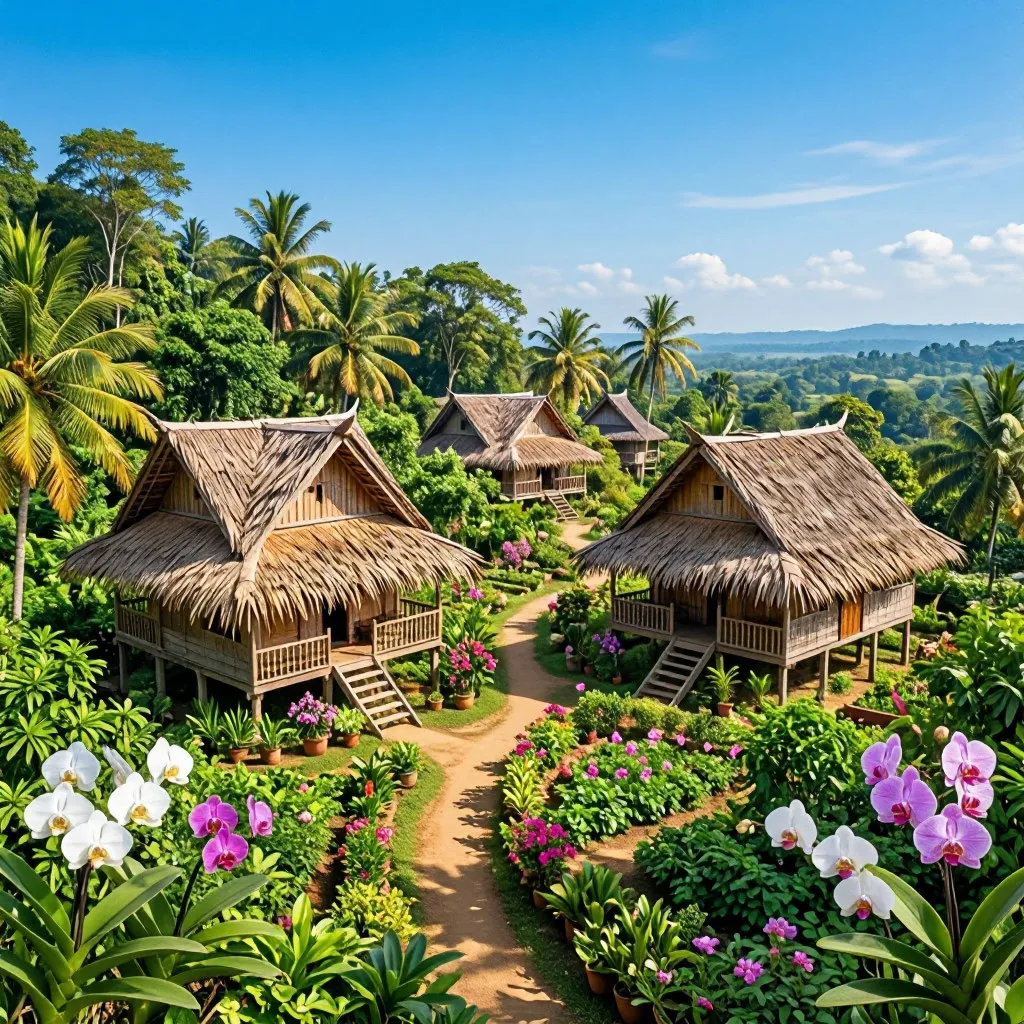
Imagine entering a realm where rain falls like a heavy curtain, draping the emerald cliffs of the East Khasi Hills in a perpetual, mystical fog. Here, tucked away along the misty border separating India and Bangladesh, lies a community that has quietly challenged the chaotic norms of modern urbanization. Far from the concrete jungles of Delhi or Mumbai, the tiny hamlet of Mawlynnong represents a pristine sanctuary where nature and humanity coexist in flawless harmony. Known across the globe as the cleanest village in Asia, this spectacular destination has transformed from an obscure tribal settlement into a shining beacon for sustainable travel. This comprehensive Mawlynnong Meghalaya travel guide is designed to help you navigate this green wonderland, revealing the cultural, biological, and historical secrets that make it one of the most compelling North East India tourist spots to explore today.
The alternative to conventional, commercialized mountain resorts is exploring an organic paradise that feels completely disconnected from the pressures of modern life. By incorporating a trek through these moss-draped forests, you get to experience a rare social model where environmental conservation is not a regulatory chore, but a core component of daily spiritual life.
The philosophy of cleanliness: how Mawlynnong became a global benchmark
The impeccable state of the village is not a recent marketing gimmick designed to attract tourists; it is a deeply ingrained cultural tradition that spans generations. The Khasi community, which inhabits this region, follows a matrilineal social structure where lineage and inheritance are passed down through the mother. In this close-knit society, the responsibility of maintaining the home and the shared community spaces is shared equally by every member, regardless of gender or age. From early childhood, kids are taught to collect fallen leaves, sweep the cobblestone pathways, and maintain the public gardens that line the village streets.
This collective dedication is supported by an ingenious, zero-waste system of waste management. Throughout the village, you will find conical baskets called khoh, hand-woven from local bamboo, placed at regular intervals along the pathways. All organic waste collected in these baskets is converted into high-grade compost, which is then used to nourish the vibrant flower beds and kitchen gardens that adorn every home. Non-biodegradable waste is carefully stored and transported to the state capital for recycling, ensuring that nothing is left to pollute the pristine local soil.
Practical route planner: how to reach the pristine paradise
Navigating the mountainous terrain of the Northeast requires a bit of planning, as the village is situated deep within the rugged plateau of Meghalaya. Most travelers begin their journey in the neighboring state of Assam, flying into the bustling city of Guwahati before embarking on a highly scenic drive through deep gorges, pine forests, and cascading waterfalls.
Selecting the right route to reach this remote village depends heavily on your entry point into the northeastern region and the amount of time you wish to spend soaking in the dramatic mountain landscapes. To simplify your itinerary planning, we have compiled a detailed breakdown of the primary transit pathways available for travelers navigating the hills of Meghalaya.
| Starting point | Distance to village | Travel duration | Best transport mode | Scenic highlights along the way |
|---|---|---|---|---|
| Guwahati | 172 kilometers | 5 to 6 hours | Private tourist cab | Umiam Lake views and Shillong bypass road |
| Shillong | 78 kilometers | 3 hours | Shared local taxi | Laitlyngkot canyons and pine forests |
| Cherrapunji | 85 kilometers | 3 hours | Private SUV | Wahkaba falls and deep valley overlooks |
| Dawki | 30 kilometers | 1.5 hours | Local local bus | Clear waters of the Umngot River |
This routing matrix demonstrates that while Shillong offers the most direct and physically relaxing journey, starting from Guwahati remains the most practical choice for those traveling from major Indian metropolitan centers due to superior flight connectivity. Regardless of which path you choose, the transition from national highways to winding mountain roads offers an unforgettable visual experience, showcasing the dramatic elevation changes that characterize these beautiful North East India tourist spots.
Engineering wonders of nature: understanding the living root bridges
No trip to this region is complete without witnessing the incredible bio-engineering marvels known as the living root bridges. Located in the neighboring village of Riwai, just a short walk from Mawlynnong, these ancient structures are grown rather than built. Over a century ago, the Khasi ancestors realized that traditional wooden bridges would quickly rot under the intense humidity and torrential monsoon rains of Meghalaya, which is officially the wettest place on earth.
To solve this problem, they turned to the resilient Ficus elastica tree. By guiding the strong, flexible roots of these trees through hollowed-out betel nut trunks placed across raging rivers, the villagers trained the roots to grow horizontally. Over several decades, the roots crossed the rivers and anchored themselves firmly into the opposite bank, creating a living, self-strengthening bridge that can easily support the weight of dozens of people simultaneously.
Visiting these ancient structures is a highlight of any Meghalaya itinerary, but it requires a basic understanding of local terrain and physical preparation to ensure a safe and respectful visit. To maximize your experience while walking across these fragile living monuments, travelers should follow a structured sequence of steps during their trek.
- Wear slip-resistant footwear to navigate the wet stone steps leading down to the valley.
- Purchase your entry ticket at the community counter in Riwai to support local conservation.
- Maintain a slow, steady pace while crossing the bridge to protect the delicate root system.
- Keep your hands free to hold onto the natural bamboo railings installed along the path.
- Avoid swimming in the deep pools directly beneath the bridge during the heavy monsoon season.
Following this practical checklist not only protects your personal safety on the damp forest paths but also ensures that these delicate biological structures remain undamaged for future generations. The local communities work tirelessly to preserve these ancient pathways, and observing these simple guidelines is a vital part of practicing responsible ecotourism in the region.
Local accommodation: finding the best homestays and retreats
To truly appreciate the slow, peaceful rhythm of life in the cleanest village in Asia, you should plan to spend at least one night in one of the local homestays. Unlike commercial hotels, these accommodations are simple, rustic, and managed directly by local families. Guests stay in traditional Khasi cottages constructed from sustainable materials like bamboo, thatch, and local timber, offering a cozy and authentic living experience.
Staying with a local family also provides an exceptional opportunity to sample the traditional cuisine of Meghalaya. Meals are typically prepared using organic ingredients harvested directly from the surrounding forests and kitchen gardens. You can look forward to enjoying simple yet highly flavorful dishes like Jadoh, a fragrant red rice dish cooked with local herbs, and various preparations of bamboo shoots, wild mushrooms, and fresh river fish, all served with a warm hospitality that makes you feel like an honored guest.
Essential sights and hidden gems in the vicinity
Beyond the manicured streets of the village, the surrounding landscape is filled with natural wonders and cultural landmarks. One of the most popular attractions is the Sky View, a towering watchtower constructed entirely from bamboo that rises above the forest canopy. From the top of this hand-made structure, visitors can enjoy panoramic views of the plains of Bangladesh stretching out into the horizon.
The village is also home to the Church of the Epiphany, a beautiful century-old stone structure surrounded by manicured lawns and vibrant orange orchards. The church serves as a central gathering point for the community, standing as a testament to the rich history and enduring faith of the Khasi people.
The village is a highly sensitive ecological zone where conventional urban habits do not apply, meaning visitors must adapt to local codes of conduct to maintain the pristine state of the community. Before packing your bags and setting off on your journey, take a moment to familiarize yourself with the essential rules and gear required for a seamless stay.
- Pack reusable water bottles to avoid bringing single-use plastic into the village area.
- Carry a compact umbrella or lightweight raincoat regardless of the season you visit.
- Respect local signs regarding designated smoking and organic waste disposal zones.
- Bring sufficient physical cash as mobile networks and digital payment terminals can be unstable.
- Ask for permission before photographing local residents, their children, or private homes.
These mindful travel practices are essential for protecting the delicate social and ecological fabric of this isolated tribal sanctuary. By aligning your behavior with the village’s conservationist philosophy, you contribute directly to the economic and environmental sustainability of the region, ensuring that the cleanest village in Asia retains its pristine charm for years to come.
Sustainable tourism and the future of North East India tourist spots
As tourism in the Northeast continues to grow, Mawlynnong stands as a crucial case study in how to balance commercial success with environmental protection. The village council closely monitors the number of visitors, ensuring that the local infrastructure is never overwhelmed. By reinvesting tourism revenue directly into community development, healthcare, and education, the village has created a self-sustaining model that improves the lives of its residents while preserving their heritage.
This balanced approach serves as an inspiring blueprint for other North East India tourist spots. It proves that tourism does not have to result in pollution, cultural erosion, or environmental destruction. When a community remains united in its values, it can welcome the world without losing its soul, leaving visitors with a deep appreciation for the beauty, resilience, and wisdom of the Khasi people.