
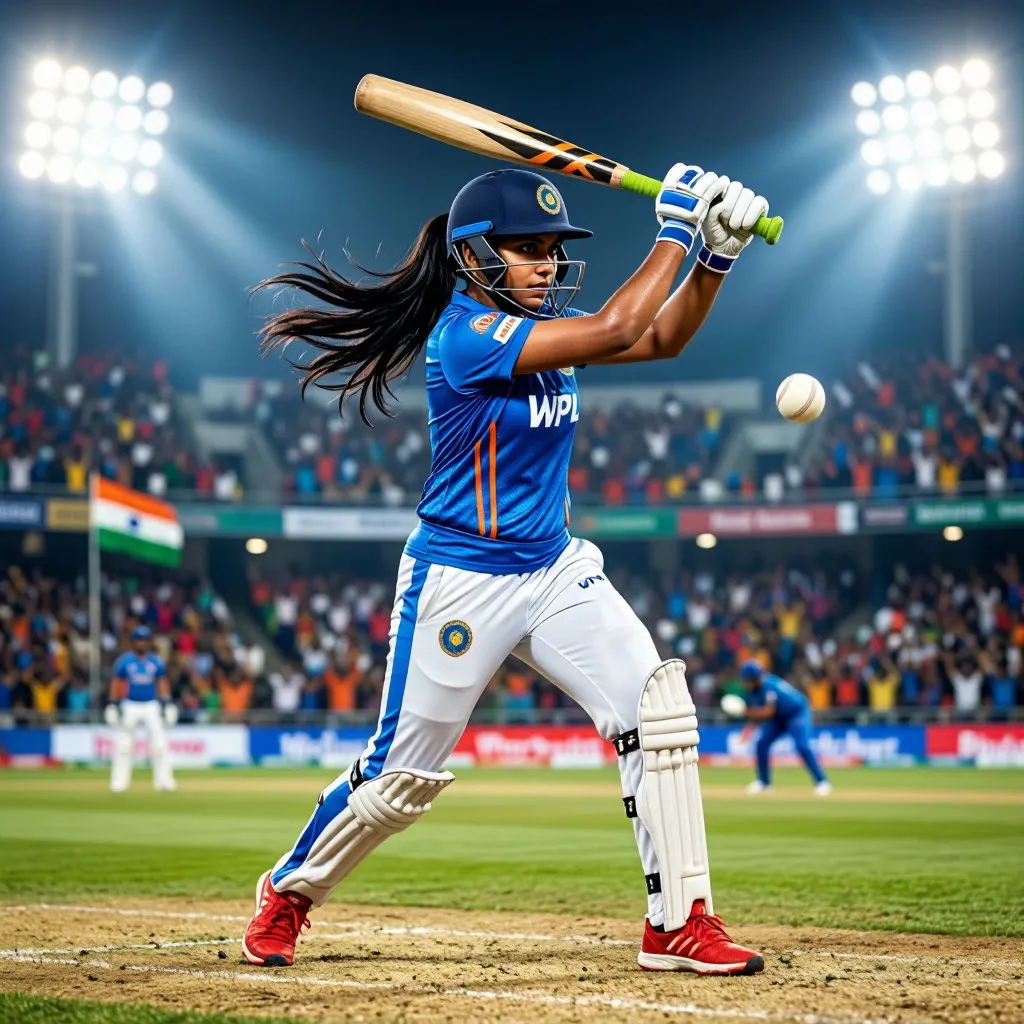
For decades, the sporting heartbeat of India resonated to a highly singular, male-dominated rhythm. Whenever the nation spoke of cricket, the mental imagery was instantly filled with packed stadiums cheering for male icons, while the incredible achievements of women were relegated to small, obscure columns on the back pages of sports newspapers. Pioneering female athletes in India played not for fame or fortune, but out of sheer, unadulterated passion, often traveling in unreserved train compartments and playing on uneven, neglected outfields. However, this historical imbalance is undergoing a spectacular correction. The remarkable rise of women cricket has reached a historic peak, driven primarily by the blockbuster launch of the Women’s Premier League India, a tournament that has shattered glass ceilings, elevated financial security, and inspired a completely new generation of young girls to pick up a bat and dream of global dominance.
This monumental shift represents far more than just a successful sporting event. It is a profound social and cultural revolution that is rewriting what is possible for young girls across the sub-continent, proving that the boundary ropes of the cricket field can no longer restrict their dreams.
Out of the shadows: the historical struggle of female cricketers in India
To understand the magnitude of the current revolution, it is essential to look back at the difficult road navigated by the older generations of players. For a long time, women’s cricket was managed by an independent body, the Women’s Cricket Association of India, which operated on a shoestring budget. It was only in the year 2006 that the Board of Control for Cricket in India took over the administration of the women’s game. While this merger brought better infrastructure, the underlying perception remained slow to change: women’s matches were still treated as secondary events, often played in empty stadiums with minimal television coverage and virtually no commercial sponsorship.
The turning point that woke up the nation arrived in the summer of 2017. During the ICC Women’s World Cup in England, the Indian team, led by the legendary Mithali Raj, played an incredibly explosive brand of cricket, storming their way into the finals at a sold-out Lord’s Cricket Ground. Millions of fans back home watched the broadcast, captivated by the skill, grit, and emotional intensity of the players. Names like Harmanpreet Kaur and Smriti Mandhana became household topics overnight. The country suddenly realized that these women were not just playing the game; they were mastering it, setting the stage for a commercial explosion that would forever change the landscape of the sport.
The birth of the Women’s Premier League India: a financial and cultural earthquake
While the 2017 tournament proved the existence of a massive audience, the players still lacked a consistent, high-stakes platform to showcase their talent on home soil. That final barrier fell in March of 2023 with the inaugural season of the Women’s Premier League India. The bidding war for the five founding franchises was unprecedented, attracting major corporate conglomerates and generating astronomical sums that instantly made the tournament the second-most valuable women’s sports league in the world, trailing only the WNBA in the United States.
To fully comprehend the scale of this sporting revolution, it is essential to examine the structural and financial differences between the previous era of domestic cricket and the modern franchise system. This transformation highlights how rapidly the environment has evolved for competitive female sports.
| Structural parameter | Classic domestic cricket era | Modern WPL era | Impact on domestic players |
|---|---|---|---|
| Annual player contracts | Low-tier matching fees with minimal security | Multi-million rupee franchise contracts | Immediate financial independence and stability |
| Media broadcasting rights | Extremely limited or non-existent coverage | Prime-time live television and digital streaming | National recognition and household fame |
| Team training support | Basic regional facilities with shared resources | World-class coaching and sports science staffs | Rapid improvement in physical fitness and skills |
| Competitive matches | Games played behind closed doors on empty grounds | High-pressure matches in front of packed stadiums | Superior mental resilience and tactical maturity |
This comparative data illustrates that the tournament did not merely add another event to the calendar; it completely rebuilt the economic ecosystem of the sport. The massive influx of capital has closed the gap between domestic and international standards, ensuring that young talents can commit to the sport as a viable, full-time professional career without worrying about their financial future.
Elevating the professional standard: equal pay and world-class training
The financial windfall of the franchise system was accompanied by another historic decision by the national governing body. In late 2022, the board announced a groundbreaking pay equity policy, declaring that contracted male and female international players would receive the exact same match fees. This policy, combined with the earnings from franchise cricket, meant that female athletes in India were finally being compensated in a manner that reflected their immense contribution to the sporting fabric of the nation.
The benefits of this commercial windfall extend far beyond the tournament’s playing window, driving a comprehensive upgrade in how female cricketers prepare for international competition throughout the year. The modernization of the sport’s infrastructure can be seen across several key developmental areas.
- World-class coaching staffs: domestic players now train under legendary international coaches who introduce modern strategic theories.
- Advanced sports science: access to dedicated nutritionists, physiotherapists, and strength coaches has drastically reduced recovery times.
- Elite training facilities: players utilize state-of-the-art academies that were previously reserved exclusively for male teams.
- International talent exposure: competing alongside global superstars accelerates the tactical growth of young Indian uncapped players.
- Mental health support: dedicated sports psychologists help athletes manage the intense pressure of playing in front of millions of viewers.
These structural advancements ensure that when a player makes the transition from domestic tournaments to the international stage, they are already accustomed to professional standards. The physical and mental preparation matches that of any elite global sports organization, raising the competitive ceiling of the entire national squad.
Inspiring the grassroots: the social revolution in rural India
Perhaps the most beautiful aspect of the rise of women cricket is its profound impact on the mindsets of families living in the rural heartlands of India. Historically, sports were viewed as a luxury or a distraction for young girls, who were instead encouraged to focus solely on domestic duties or conventional academic paths. Today, parents watching television in small towns in states like Haryana, Jharkhand, and Uttar Pradesh are seeing young women from similar backgrounds being celebrated as national heroes, earning substantial incomes, and commanding respect on a global stage.
For a young girl living in a remote village, the path from playing street cricket to representing the country requires navigating a complex social landscape. This developmental journey has now been structured into a clear, attainable progression that makes the dream of professional sports far more realistic.
- Discovering the game through local school tournaments and academy programs.
- Joining district-level selection camps where professional scouts monitor young talent.
- Securing a spot in state-level age-group tournaments to build competitive experience.
- Earning a developmental contract with a franchise to train under elite mentors.
- Representing the national team on the grandest stages of international cricket.
This structured pathway demystifies the process of becoming an elite athlete, giving families the confidence to support their daughters’ sporting ambitions. What was once viewed as an impractical hobby is now recognized as an honorable and highly lucrative career path, completely transforming the social fabric of rural communities.
Tactical evolution and the road to global dominance
The integration of international stars with young domestic players in franchise cricket has triggered a massive tactical evolution. Historically, the Indian women’s team relied heavily on exceptional individual performances from a few star players. Today, the team boasts incredible depth, with multiple match-winners capable of turning a game around from any situation.
The physical fitness levels of the players have reached unprecedented heights. The modern Indian cricketer is a highly athletic, power-hitting athlete who can field dynamically and sustain high-intensity efforts under extreme weather conditions. This physical transformation has allowed India to compete on equal terms with historically dominant teams like Australia and England, paving the way for a sustained period of global dominance.
Reclaiming the narrative: a future without boundaries
The story of women’s cricket in India is a masterclass in perseverance, systemic change, and the power of opportunity. By providing these athletes with the resources, respect, and platform they deserve, the nation has unlocked a reservoir of athletic talent that was ignored for far too long.
As we look toward the future, the boundaries that once restricted female athletes in India are dissolving completely. The packed stadiums, the roaring crowds, and the millions of young girls watching their heroes on screen are proof that the game belongs to everyone. By embracing the spirit of the modern era, India has not only transformed its domestic sporting culture but has positioned itself as the driving force of the global game, ensuring that the future of cricket is undeniably, gloriously female.