
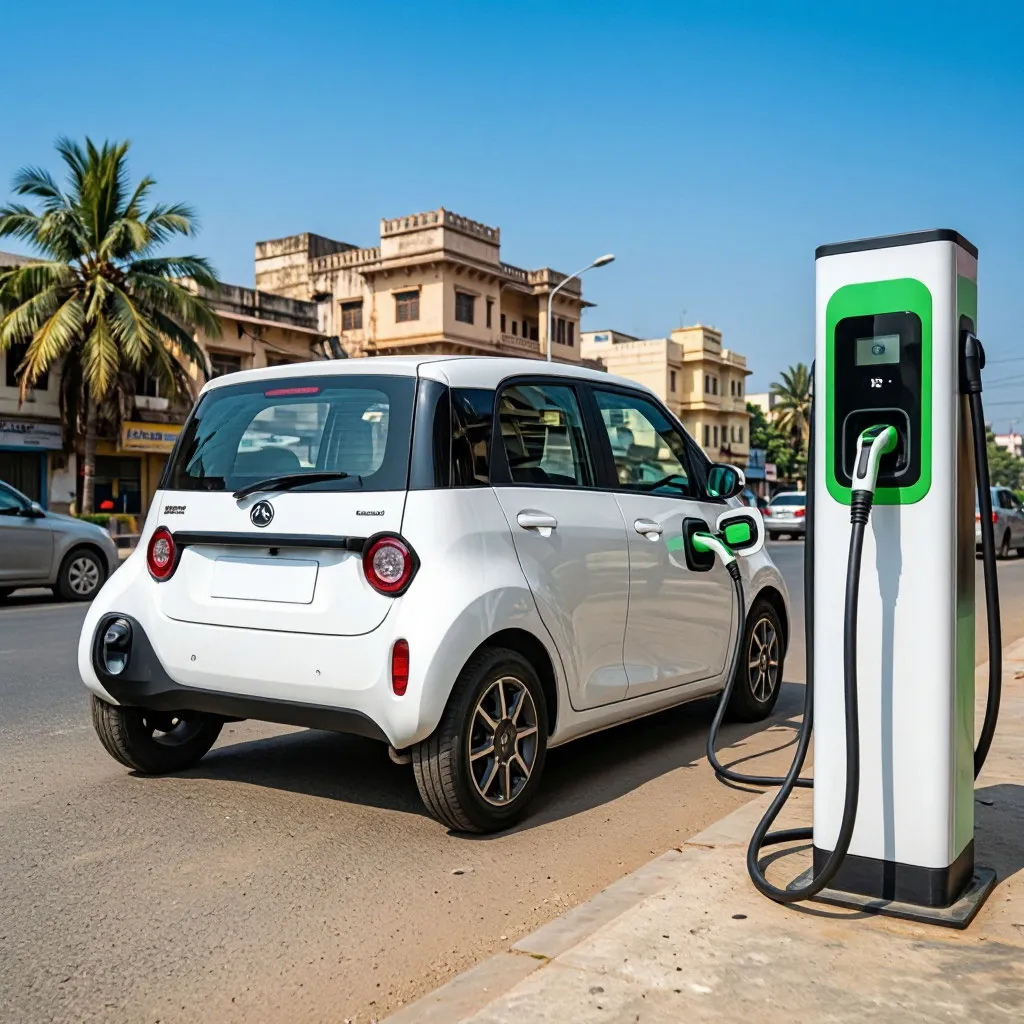
The familiar morning chorus of Indian metropolitan roads is undergoing a profound acoustic transformation. The aggressive, high-pitched revving of internal combustion engines and the heavy exhaust fumes of diesel-powered commuters are gradually giving way to a quiet, futuristic whir. This silent revolution is not merely a cosmetic shift; it is a fundamental reconfiguration of how the nation moves, driven by pressing environmental challenges, volatile fuel prices, and a massive wave of technological innovation. For the average Indian family, the dream of owning a clean, modern, and highly economical vehicle has transitioned from a distant luxury to an immediate, highly practical reality.
This structural shift is fueled by a rapidly expanding lineup of budget-friendly passenger vehicles and an increasingly robust power grid. As domestic manufacturers localize battery assembly and improve motor efficiency, the initial acquisition cost of electric mobility is tumbling, making these vehicles highly competitive with their traditional petrol and diesel counterparts.
The economic mathematics of switching to electric mobility
To truly appreciate the value of this transition, one must analyze the stark contrast in daily operational expenses. Operating a traditional petrol hatchback in a congested Indian city like Mumbai or Delhi typically costs between seven and nine rupees per kilometer, factoring in stop-and-go traffic and rising fuel costs. In sharp contrast, an electric vehicle charging on standard domestic tariff rates operates at a fraction of that cost, usually averaging between one and one and a half rupees per kilometer. Over an average annual running distance of fifteen thousand kilometers, this dramatic difference translates into massive direct savings that can easily offset the slightly higher initial purchase price within less than three years of daily usage.
Furthermore, the mechanical simplicity of an electric drivetrain eliminates a vast array of high-wear components that plague traditional vehicle owners. Without complex gearboxes, engine valves, spark plugs, catalytic converters, or motor oil systems, the routine maintenance requirements of these vehicles are remarkably minimal. Owners no longer have to worry about frequent oil changes or mechanical wear, as the servicing of an electric car primarily revolves around checking tire pressure, topping up windshield fluid, and monitoring the electronic battery management systems.
The cheapest electric cars India has to offer in 2026
The democratization of the domestic automotive sector has unleashed a wave of highly capable, compact, and affordable passenger cars designed specifically for Indian road conditions and tight parking spaces. These modern machines are no longer glorified golf carts; they are fully equipped, highly safe, and technologically advanced vehicles capable of handling both daily office commutes and weekend highway getaways.
To help you make the most informed decision based on your specific budget, daily travel distance, and space requirements, it is highly beneficial to compare the leading affordable models available on the market. This overview highlights the core technical specifications and pricing structures that define the current entry-level landscape in the country.
| Vehicle model | Battery pack capacity | Claimed driving range (MIDC) | Approximate starting price (ex-showroom) | Primary market highlight |
|---|---|---|---|---|
| MG Comet EV | 17.3 kWh | 230 km | 6.99 Lakh INR | Ultra-compact design for tight city parking |
| Tata Tiago EV | 24.0 kWh | 315 km | 7.99 Lakh INR | Most practical and popular family hatchback |
| Citroen eC3 | 29.2 kWh | 320 km | 11.60 Lakh INR | Exceptional cabin space and plush ride comfort |
| Tata Tigor EV | 26.00 kWh | 315 km | 12.49 Lakh INR | Stylish compact sedan with a spacious boot |
| Mahindra XUV400 | 34.5 kWh | 375 km | 15.49 Lakh INR | Punchy acceleration and rugged SUV stance |
The diverse lineup presented above proves that buyers are no longer forced to spend exorbitant sums to join the electric mobility movement. By offering various body styles and battery configurations, manufacturers have successfully tailored their products to match different lifestyle needs, proving that the cheapest electric cars India currently offers are mature, reliable, and ready for mainstream adoption.
Setting the gold standard: a comprehensive Tata Nexon EV review
While entry-level hatchbacks have made mobility accessible, one specific vehicle has consistently defined the benchmark for the entire industry. Conducting a thorough Tata Nexon EV review reveals why this particular compact SUV has captured over seventy percent of the electric passenger vehicle market in India. From its rugged build quality and high ground clearance to its highly sophisticated cabin electronics, the vehicle represents the perfect marriage of traditional Indian passenger requirements and cutting-edge electric performance.
Equipped with a highly advanced liquid-cooled lithium iron phosphate battery pack, the SUV is built to withstand the extreme thermal challenges of Indian summers. The vehicle is offered in two distinct variants: the Medium Range option, which is perfect for daily urban runabouts, and the Long Range version, which boasts a larger forty point five kilowatt-hour battery. In real-world driving conditions, the Long Range variant comfortably delivers over three hundred kilometers on a single charge, completely eliminating any lingering range anxiety for intercity travel.
The driving dynamics of the vehicle are exceptionally refined, featuring customizable regenerative braking levels that allow for seamless one-pedal driving in heavy bumper-to-bumper traffic. Inside the cabin, a massive high-definition infotainment screen offers wireless smartphone integration, connected car technology, and advanced safety features, including a highly accurate blind-spot monitoring camera system. With its impressive five-star adult safety rating and a highly competitive price point, it remains the undisputed champion of India’s green transition.
The nervous system of green mobility: state of EV charging stations in India
The rapid adoption of electric cars is intimately connected to the expansion of a reliable, high-speed charging network across the country. Range anxiety, which once acted as a major psychological barrier for potential buyers, is being systematically dismantled by a coordinated effort between state governments, public sector undertakings, and aggressive private infrastructure developers.
Understanding the operational landscape of these charging points is essential for planning long-distance journeys with absolute confidence. The modern network is built upon several key components that ensure your vehicle remains powered whether you are parked at an office complex or driving along a major national highway.
- Public high-speed DC chargers: rapid installation of fifty kilowatt and one hundred and twenty kilowatt CCS2 chargers along major tourist corridors.
- Community AC charging networks: integration of slow and semi-fast chargers within residential housing societies and corporate parking garages.
- Mall and retail charging hubs: convenient charging points located in commercial entertainment zones, allowing owners to charge while shopping.
- Highway fuel station integration: retrofitting of traditional petrol pumps with multi-protocol charging units to facilitate seamless intercity transit.
These diverse charging avenues work together to create a seamless energy grid that supports daily commuting and long-distance road trips alike. By strategically locating these EV charging stations near restaurants, hotels, and rest stops, developers have transformed the charging process into a convenient, stress-free routine that integrates perfectly with standard travel breaks.
Step-by-step transition: how to prepare your home for your first electric car
For the vast majority of electric vehicle owners, approximately eighty percent of all charging activities occur overnight at home. This convenient routine eliminates the need to visit public stations altogether for daily usage, allowing you to wake up every single morning with a fully charged battery ready for the day’s tasks.
To transition your residential parking space into a private, highly safe fueling station, you must complete a few initial setup procedures. The following sequence outlines the essential steps required to prepare your home electrical infrastructure for your new vehicle.
- Assess your domestic power allocation: verify with your local electricity distribution company that your home meter has sufficient sanctioned load.
- Install a dedicated residual current circuit breaker: ensure a high-quality safety switch is integrated into your charging line to protect against voltage spikes.
- Select your preferred charging unit: choose between a standard fifteen-ampere wall socket and a faster seven point two kilowatt AC wallbox charger.
- Run high-grade armored cabling: route heavy-duty electrical wiring from your main meter box directly to your designated parking spot.
- Secure formal housing society permissions: acquire the necessary clearances from your residential cooperative society or building association.
Following this structured installation process guarantees that your home setup operates with the highest standards of safety and efficiency. It protects your home’s electrical system from overheating and ensures that your vehicle charges overnight without causing any disruptions to your household appliances or neighbors.
Future outlook: what to expect in the Indian EV ecosystem by 2030
As we look toward the end of the decade, the momentum behind clean energy in India is set to accelerate even further. The central government’s production linked incentive schemes are encouraging local manufacturing of lithium-ion cells, which is expected to drive battery prices down even further. This localized production will soon bridge the price gap between electric cars and traditional petrol vehicles entirely, making green mobility the default choice for every consumer.
Furthermore, the expansion of solar-powered charging grids and the commercial deployment of solid-state battery technologies promise to make electric cars even cleaner and more efficient. By embracing this technology today, Indian consumers are not only saving substantial amounts of money but are actively contributing to a cleaner, quieter, and healthier nation for generations to come.