
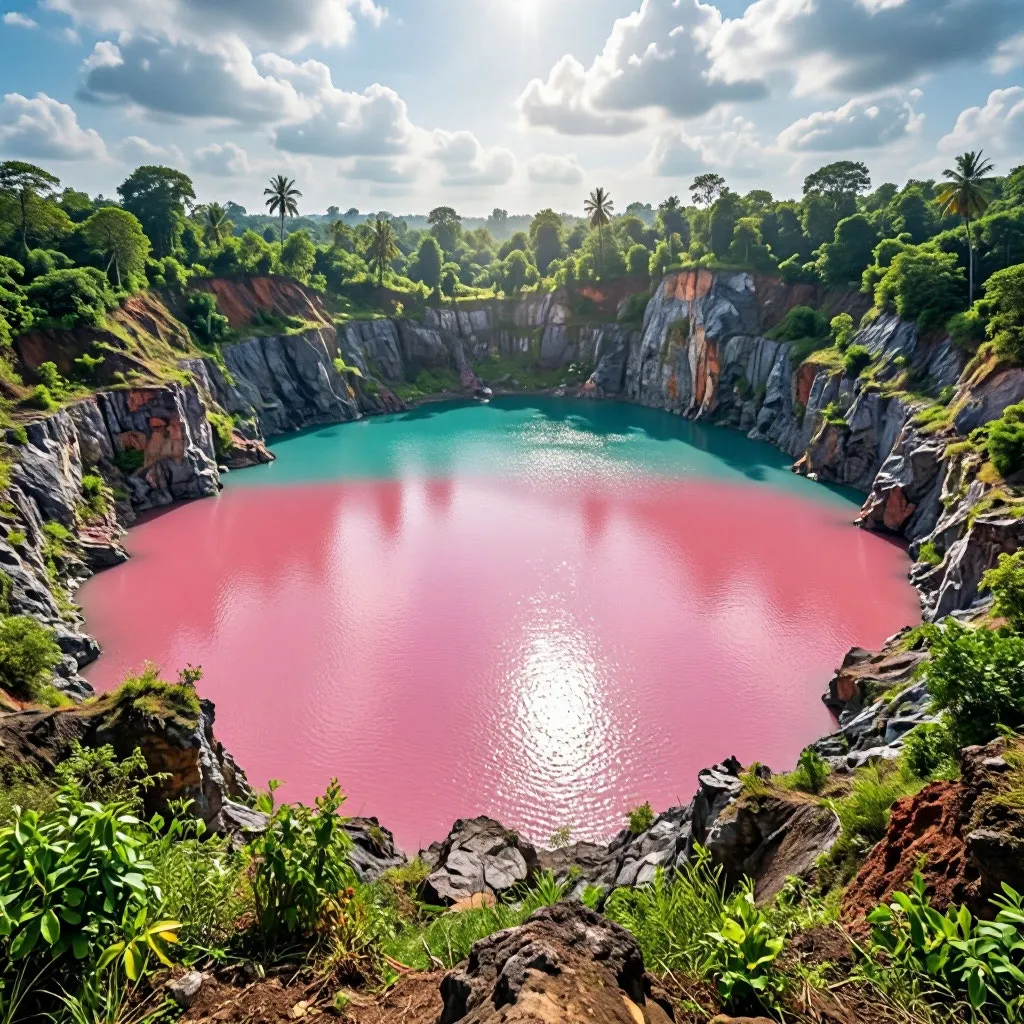
Deep in the heart of the Deccan plateau, where dry plains stretch toward the horizon, lies a massive bowl of deep green water wrapped in a dense jungle. This is not a typical volcanic caldera or a standard rainwater depression. Millions of years of volcanic history in the region were suddenly disrupted in a fraction of a second by a mountain of rock hurtling through space. The result is one of the most spectacular natural anomalies on our planet. This geographic wonder offers a rare bridge between geology, astronomy, and microbiology, challenging scientists and drawing travelers to its rim.
The alternative to standard mountain hiking is exploring a geological miracle that feels like a piece of another planet dropped into rural India. By incorporating a trek down into this impact zone, you get to experience a rare natural environment that forces you to think about the vast scale of our universe and the powerful forces that continue to shape the earth.
Cosmic origins: the force of a million tons
About fifty-two thousand years ago, a giant meteor weighing more than a million tonnes plunged through the atmosphere of the earth. Traveling at an unimaginable velocity, it slammed into the hard basaltic rock of modern-day Buldhana district. The impact was so violent that it released energy equivalent to several megatons of TNT, vaporizing rock instantly and scattering debris for miles around. Today, the quiet water body that sits inside this massive bowl hides a history of extreme violence, serving as a reminder of our planet’s vulnerability to cosmic events.
The heat generated during the impact was high enough to melt quartz, transforming it into impact glass known as maskelynite. This rare material can only form under the extreme pressures of meteor collisions, making the site an absolute treasure trove for geologists. The rim of the basin rises about twenty meters above the surrounding plains, acting as a natural fortress that has kept the interior ecosystem isolated from the surrounding agricultural lands for thousands of years.
A unique shield: the world’s only basaltic impact crater
While there are over a hundred and ninety known impact craters across the globe, almost all of them exist in sedimentary or granitic rocks. The basaltic rock of the Deccan traps is what makes this location exceptionally rare. Basalt is a hard, dense volcanic rock, and studying how it reacts to a high-velocity meteor collision is crucial for planetary scientists. Because the surface of Mars and the Moon are also heavily basaltic, this specific site provides a terrestrial laboratory for researchers trying to understand geological formations on other celestial bodies.
The circular shape of the basin has remained remarkably intact over thousands of years, largely due to the resistance of the basaltic rock to erosion. The surrounding forests have also acted as a natural barrier, protecting the inner slopes from landslides. This preservation allows scientists to study the exact dynamics of high-speed collisions without the distorting effects of heavy tectonic movement or rapid soil degradation.
The chemical puzzle: dual nature of the water
One of the most perplexing features of the reservoir is the chemical makeup of its water. It is both highly alkaline and saline, a combination that rarely occurs in natural lakes. The water has a pH level of nearly ten, making it almost as basic as soapy water. Even more fascinating is the fact that the lake contains distinct chemical zones. The outer neutral region fed by freshwater springs differs greatly from the highly alkaline central basin, creating a delicate ecosystem where only specialized life forms can survive and thrive.
The high concentration of sodium carbonate and other salts in the central area has prevented most common fish species from colonizing the lake. Instead, the water is populated by specialized blue-green algae and unique bacteria that have adapted to these extreme conditions. The unique chemistry also gives the water a slick, almost oily texture, which visitors notice immediately upon touching it.
The magnetic anomaly: where compasses lose their way
Geologists and explorers working inside the crater have frequently reported strange behavior from their navigation equipment. In several spots near the lake shore, traditional magnetic compasses fail to show true north, spinning erratically or pointing in incorrect directions. Scientists believe this phenomenon is caused by the massive presence of magnetite and other iron-rich minerals that were melted and magnetized by the intense heat and pressure of the meteor impact, creating localized magnetic distortions.
This magnetic signature is another key characteristic that links the site directly to outer space. Similar magnetic anomalies have been observed on the moon, where meteor strikes have permanently magnetized basaltic plains. Studying these magnetic fields helps researchers understand how ancient planetary magnetic shields functioned before cooling down completely.
To appreciate the scale and scientific significance of this geological feature, it is helpful to contrast its characteristics with other prominent impact craters across the world. By examining the dimensions, rock type, and age of these formations, we can understand why this particular site stands out as a peerless subject of scientific research.
| Crater name | Location | Age of impact (approximate) | Diameter | Dominant rock type |
|---|---|---|---|---|
| Lonar crater | India | 52,000 years | 1.8 kilometers | Basaltic volcanic rock |
| Barringer crater | United States | 50,000 years | 1.2 kilometers | Sedimentary limestone |
| Wolfe Creek crater | Australia | 120,000 years | 0.87 kilometers | Quartzite sandstone |
| Tenoumer crater | Mauritania | 21,000 years | 1.9 kilometers | Granitic gneiss |
This comparison highlights that while other craters share a similar age or diameter, none of them share the unique basaltic foundation that defines the Indian site. The dense volcanic bedrock has preserved the circular shape of the bowl far better than softer sedimentary formations would have, making it an invaluable asset for scientists studying astronomical sites India offers to the global community.
The pink miracle: why the water changed color
In June of the year twenty-twenty, local residents and tourists were stunned when the entire lake suddenly transformed from its usual greenish-blue to a vibrant, glowing pink. This dramatic shift captured international headlines and prompted immediate investigation. Biologists discovered that the color change was not due to industrial pollution, but was a natural biological reaction. A combination of low water levels, high salinity, and warm temperatures caused a massive bloom of Dunaliella salina algae and haloarchaea, microscopic organisms that produce pink carotenoid pigments to protect themselves from intense sunlight.
This biological spectacle demonstrated how dynamic the lake ecosystem remains. As the monsoon rains arrived and diluted the salt concentration, the pink hue gradually faded, and the water returned to its normal color. The event highlighted the delicate relationship between climate, chemistry, and life inside this ancient bowl.
The Martian connection: why NASA studies this lake
Researchers from the National Aeronautics and Space Administration and the Smithsonian Institution have traveled to this remote part of India multiple times. The reason lies in the striking similarity between the basaltic crater and the cratered landscapes of Mars. By analyzing the microbial life and mineral deposits in the highly alkaline water, astrobiologists hope to develop better methods for detecting signs of ancient life on the red planet. If life can survive in the harsh, salty, and basic environment of this earthly crater, similar microscopic organisms might have existed in Martian craters billions of years ago.
The presence of specific minerals, such as carbonates and clays, inside the basin also matches geological observations made by Martian rovers. Understanding how these minerals form in a water-filled basaltic crater on earth gives scientists a crucial reference point for interpreting data sent back from space exploration missions.
Ancient temples: the architectural heritage of the rim
The physical beauty of the crater is matched by its rich cultural and historical legacy. Scattered along the rim and deep inside the basin are the ruins of ancient temples dating back to the Yadava dynasty. These stone structures, built centuries ago, blend seamlessly with the surrounding jungle, creating an atmosphere of mystery and devotion that captivates every visitor.
To truly understand the human history built around this cosmic scar, it is worth looking at the specific historical and practical elements that define a journey to this region. The following highlights showcase both the ancient wonders hidden in the forest and the essential tips for modern explorers.
- Daitya Sudan temple: this eleventh-century monument dedicated to Lord Vishnu stands in the nearby town and features exquisite stone carvings reminiscent of Khajuraho.
- Kamalja Devi temple: located deep inside the crater near the water edge, this active temple becomes surrounded by lush greenery and wild monkeys during the monsoon season.
- Amber Khana temple: the ruins of this ancient structure sit on the crater rim, offering a vantage point to view the entire circular basin.
- Gomukh temple: a natural perennial spring flows through a stone cow-mouth structure, providing fresh water to the forest and the local wildlife.
- Choose the right season: the period from October to March offers the most pleasant weather for hiking down into the crater.
- Wear sturdy footwear: the descent along the steep, muddy trails requires shoes with excellent grip to avoid slipping on loose basaltic stones.
- Hire a local guide: an experienced guide can help you navigate the dense forest paths and point out hidden temples that are hard to find.
- Carry sufficient water: the humid and warm microclimate inside the bowl can quickly cause dehydration during the trek.
- Respect the ecosystem: do not litter or disturb the nesting birds and wild animals that make this protected sanctuary their home.
These details illustrate that a trip to this destination is both an outdoor adventure and a deep dive into the historical heritage of India. The combination of ancient hand-carved stone and untouched natural beauty makes it one of the most rewarding and unique places in Maharashtra for those willing to venture off the beaten path.
An ecological island: the jungle within the crater
Because the interior of the crater is shielded by its high walls, it has developed its own microclimate. This isolated environment has allowed a dense, lush canopy of forest to grow, acting as an oasis in the middle of a relatively dry geographic region. The jungle is home to a rich variety of wildlife, including langurs, leopards, barking deer, and over a hundred species of resident and migratory birds. It is a place where nature has reclaimed a site of cosmic destruction and turned it into a thriving sanctuary of biodiversity.
The trees inside the basin are notably taller and greener than those on the plains outside. This difference is due to the presence of natural freshwater springs that feed the crater floor, creating a constant supply of moisture that supports a complex web of flora and fauna throughout the year.
The age mystery: a debate among geologists
Determining the exact age of the impact has been a subject of intense scientific debate for decades. Initial studies using thermoluminescence dating suggested that the meteor struck around fifty-two thousand years ago. However, newer argon-argon dating techniques conducted on impact glass specimens from the site suggested the crater could be much older, potentially dating back over half a million years. This ongoing debate adds to the mystique of the lake, showing that even with modern technology, the earth still guards some of its deepest secrets closely.
This gap in dating methods highlights how difficult it is to analyze ancient impact events on active planets. Whether the impact happened fifty thousand or five hundred thousand years ago, the preservation of the crater remains a marvel of natural engineering, offering continuous lessons to planetary geologists.
Global recognition: the Ramsar site designation
In November of twenty-twenty, the lake was officially declared a Ramsar site of international importance. This prestigious designation recognizes the wetland as a vital ecosystem that must be protected from human encroachment and environmental degradation. The protection ensures that future generations of scientists, travelers, and nature lovers will be able to marvel at this cosmic scar and continue unraveling the secrets of how space and earth collided to create something truly beautiful.
This international status has also boosted conservation efforts, helping to manage tourist activities and preserve the delicate balance between the historical monuments, the surrounding forest, and the sensitive chemistry of the water basin.
The deep waters of the Deccan plateau represent far more than a simple scenic destination. They are a monument to the incredible forces that shape our solar system and a living laboratory for the future of space exploration. From its violent birth in a flash of cosmic light to its peaceful existence as a green sanctuary, this crater reminds us of the interconnectedness of our universe. Whether you are drawn by the science of space impacts, the beauty of a pink lake, or the quiet mystery of ancient ruins, this place leaves an indelible mark on everyone who stands upon its rim.