
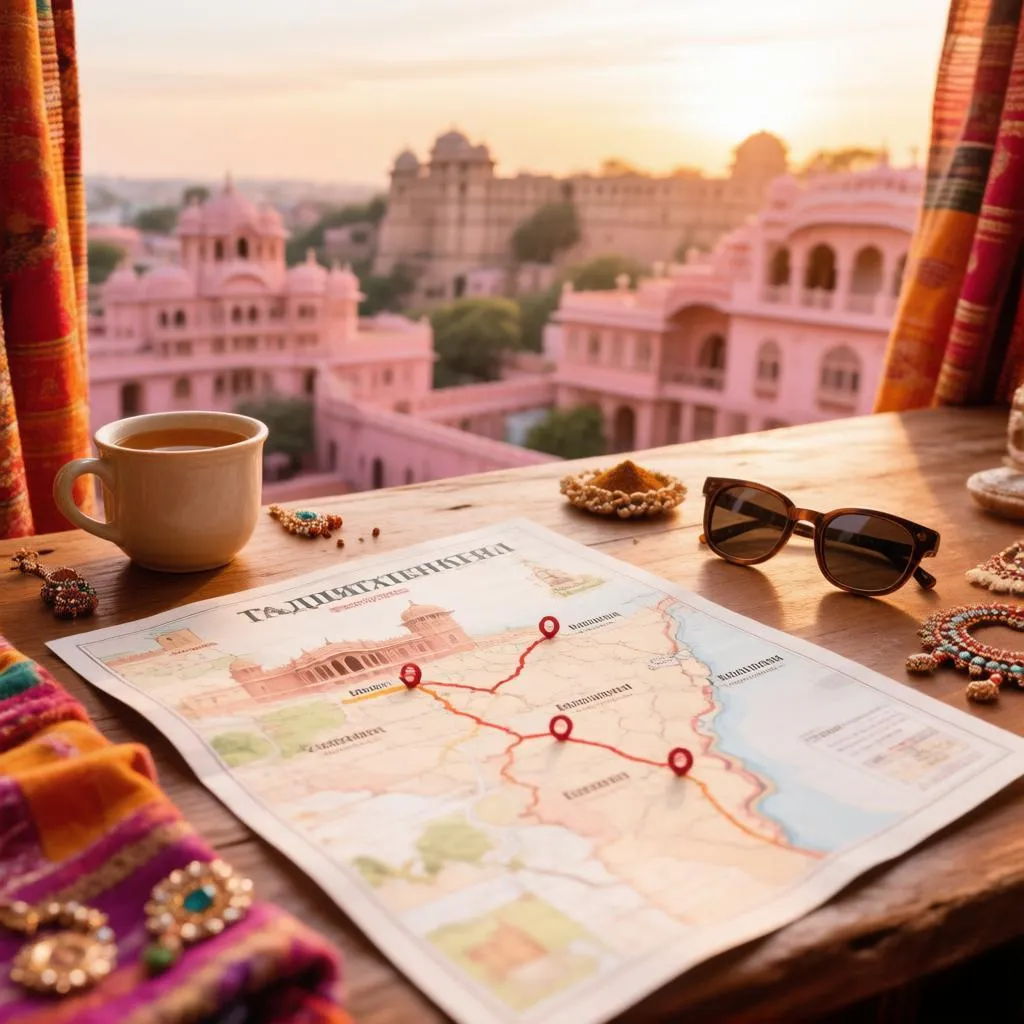
Two days in Jaipur is enough to fall for the Pink City — but only if you spend them wisely. Jaipur rewards planning more than almost any other Indian city: its monuments open early, its bazaars come alive by late morning, and its traffic will happily swallow an unplanned afternoon whole. The city spreads wider than first-time visitors expect, and the difference between a rushed checklist tour and a genuinely memorable weekend comes down to grouping sights sensibly, starting days early, and leaving room to simply sit with a chai and watch the old city go by. Here is how to do exactly that.
Getting oriented: how Jaipur is laid out
The old city, painted in its famous terracotta pink, sits at the heart of Jaipur in a rough grid designed in the eighteenth century. Its bazaars — Johari, Bapu, Tripolia, Chandpol — run in straight lines between historic gates, and most of the iconic monuments ring this core: the City Palace and Jantar Mantar near the centre, Hawa Mahal facing the main street, and the hilltop forts of Nahargarh and Jaigarh to the north, with Amber crowning the ridge a short drive beyond them.
New Jaipur spreads south and west, carrying the airport, the railway stations and most of the modern hotels. This geography suggests a natural rhythm for a two-day visit: day one inside and around the old city on foot, day two for the forts and the northern ridge, with the evening either back in the bazaars or out at a viewpoint. Nothing in Jaipur is more than forty minutes from anything else in normal traffic, which makes tight grouping genuinely possible.
Day one: the heart of the Pink City
Start at the monument Jaipur is photographed more than any other, and start early — not for the light, though the morning glow on the pink sandstone is lovely, but because the crowd behind that famous facade arrives by mid-morning.
Hawa Mahal at sunrise. The “palace of winds” was built as a screened gallery for royal women to observe street festivals unseen, and its 953 small windows catch the first light beautifully. The best photographs happen from the cafés across the street, but go inside too — the five-storey interior, with its sloping ramps rather than stairs, is calmer and more interesting than most visitors expect. Entry opens early, and an hour is plenty.
City Palace before the crowds. A short walk away, the City Palace complex blends Rajput, Mughal and European design across courtyards, gates and museums. The armoury, the textile gallery with its enormous royal garments, and the peacock gate are the highlights; the palace is still a royal residence, so parts remain private. Give it ninety minutes to two hours.
Jantar Mantar next door. Just across from the palace sits the vast garden of astronomical instruments built in the early eighteenth century — the largest stone sundial in the world towers over visitors who often mistake it for sculpture. A guide makes the instruments come alive; without one, the information boards still explain what each structure measures. Forty-five minutes is enough.
Lunch and the bazaars. By early afternoon, wander into Johari Bazaar for jewellery, Bapu Bazaar for textiles and mojaris, and the lanes around them for street food. Jaipur’s famous kachori and samosa shops, lassi served in clay kulhads, and sweets like ghewar and feeni make lunch a sightseeing event in itself.
Albert Hall at dusk. End the day at the Albert Hall Museum as the lights come on — the Indo-Saracenic building in Ram Niwas Garden is arguably the most photogenic structure in the city after sunset, with its illuminated domes reflected in the water features nearby. The museum itself stays open into the evening, so you can combine the view with the collections inside.
Day two: forts, water and viewpoints
The second day belongs to the hills north of the city, and the order matters more than the list — Amber Fort in the morning before the tour buses, then the ridge sights, then a sunset finish.
Amber Fort in the morning. The great fort-palace of Jaipur sits on a forested ridge about eleven kilometres from the old city. Arrive when the gates open: the mirror palace (Sheesh Mahal), the Ganesh Pol gateway and the courtyard views over Maota Lake justify every early alarm. The ramp up to the main gate can be walked in fifteen minutes or ridden by jeep; elephant rides remain available but are increasingly discouraged on welfare grounds, and walking gives you the fort’s ramparts at their best. Two to three hours here is standard.
Panna Meena ka Kund on the way. Tucked below Amber on the road back, this symmetrical stepwell with criss-crossing staircases is one of the most photographed corners of Jaipur — quick to visit, free, and best in late morning light.
Jaigarh Fort for the views. Connected to Amber by ridgeline paths, Jaigarh was the military counterpart to Amber’s palaces, and it holds what was once among the world’s largest cannons on wheels. Its ramparts deliver the finest panorama of the Aravalli hills and the city below. If you are driving, the two forts share a route; if you are energetic, the ridge walk between them is memorable.
Nahargarh Fort for sunset. End the day at Nahargarh, the smallest and most atmospheric of the three forts, whose terraces look straight down over the pink grid of the old city. As the sun drops, the entire Pink City turns gold and then rose beneath you — it is the view Jaipur deserves to be remembered by. The fort’s café makes a convenient place to wait out the hour before sunset.
Where and what to eat
Jaipur eats heartily, and skipping its food is a genuine loss. Beyond the street food of the old city bazaars, the city has cultivated a dining scene worth planning around. Keep these on your radar:
- Pyaaz kachori and samosa from the old-city institutions in the bazaar lanes — crispy, spicy, best eaten standing at the counter.
- Dal baati churma at a Rajasthani thali restaurant, the state’s signature meal of baked wheat balls, lentils and sweet crushed cereal.
- Laal maas for meat eaters — a fiery Rajasthani mutton curry that good restaurants across the city cook with pride.
- Lassi in kulhads from the shops near the old city gates, thick enough to hold a spoon upright.
- Ghewar and feeni from the sweet shops, seasonal or not, disc-shaped honeycomb sweets soaked in syrup.
Evening chai at a rooftop café near Hawa Mahal or Nahargarh closes each day as well as anything. Alcohol is available at licensed hotels and restaurants, but the old city itself is largely a dry zone of sweet shops and snack counters — the evening energy there is culinary rather than liquid.
Shopping in the bazaars without overpaying
Jaipur’s markets are among India’s finest, and the city’s craft traditions — blue pottery, block-printed textiles, gemstones, mojari leatherwork — make souvenirs more than trinkets. Prices in the bazaars are negotiable everywhere, and the rhythm of bargaining follows unwritten rules that a little knowledge turns in your favour. Useful practice looks like this:
- Start at roughly half the quoted price and settle somewhere near two-thirds; polite firmness beats aggressive haggling in the old city.
- Buy gemstones only from government-empanelled or long-established shops, since the jewellery trade has its share of persuasive cons.
- Check block-printed fabric for dye fastness by rubbing a damp edge, and inspect stitching on mojaris before paying.
- Keep small notes ready, because change for large denominations stalls every transaction in the lanes.
Johari Bazaar skews to jewellery, Bapu Bazaar to fabric and footwear, Chandpol to wooden and marble crafts, and Tripolia to bangles and ribbons. Shops close for a couple of hours in the late afternoon on many days, so plan purchases for the morning or evening windows.
Practical planning for a smooth trip
The logistics decide whether two days feel smooth or scattered, and Jaipur’s particulars are worth knowing in advance. Getting around: auto-rickshaws and app-based cabs cover the city cheaply; negotiate auto fares before boarding or insist on the meter; app cabs work well but can be scarce near Amber in the early morning. Entry and timing: most monuments open around nine, Hawa Mahal’s exterior is always viewable, and combined or composite tickets often reduce costs if you plan several palaces and forts. What to wear: light cotton in summer, a jacket for winter evenings, and modest clothing plus easy footwear for forts and temples. Money and connectivity: carry cash for the bazaars, keep a working data connection for cabs, and screenshot tickets before heading out in case signal dips inside the forts.
For orientation on what to budget, the figures below reflect what most visitors actually spend per person on a comfortable two-day trip, excluding travel to and from Jaipur itself.
| Expense | Budget traveller | Comfortable traveller |
|---|---|---|
| Accommodation per night | ₹800–1,500 | ₹3,000–7,000 |
| Food per day | ₹400–700 | ₹1,200–2,500 |
| Local transport per day | ₹300–600 | ₹800–1,500 |
| Monuments and entries, total | ₹300–800 | ₹1,000–2,000 |
| Shopping allowance | As desired | ₹2,000–5,000 |
These ranges shift with season and personal habits — heritage hotels in the old city can cost more than the comfort bracket shown, while fort entry for foreigners is priced higher than for Indian nationals. What the figures confirm is that Jaipur remains affordable at both ends: a determined budget traveller manages on roughly ₹1,500–2,800 per day, while a comfort-oriented couple’s spend stays well below what the same standard costs in most Indian metros.
When to go and what to pack
October to March is Jaipur’s high season for good reason: days are mild, evenings are cool, and the desert light flatters every sandstone facade. Winter mornings can be genuinely cold, and the Kumbhalgarh-style haze of December-January sometimes softens distant views, so layers matter. March and early April bring warmth without the punishing summer, plus festivals like Gangaur and the elephant festival in some years. Summer, from late April to June, is severe — forts and palaces turn into ovens by midday, and only dawn visits make sense. The monsoon brings a brief green refresh in July and August, and photography during this window has its own moody appeal.
Packing is simple: comfortable walking shoes for fort ramps and bazaar lanes, sunscreen and a hat most of the year, a refillable water bottle, and modest clothing for temple visits. Umbrellas for the monsoon, a warm layer for winter sunsets at Nahargarh, and a scarf that doubles as dust protection in the dry months round out the list.
A farewell thought
Two days cannot exhaust Jaipur — the city has more palaces, stepwells, temples and hidden courtyards than any short visit can claim — but it can capture its essence: the pink streets at dawn, a mirrored hall inside Amber, the gold light over the old city from Nahargarh’s ramparts, and a kulhad of thick lassi somewhere between. Come with a plan, walk early, eat freely, bargain cheerfully, and the Pink City will give you back a weekend that feels twice as long.