
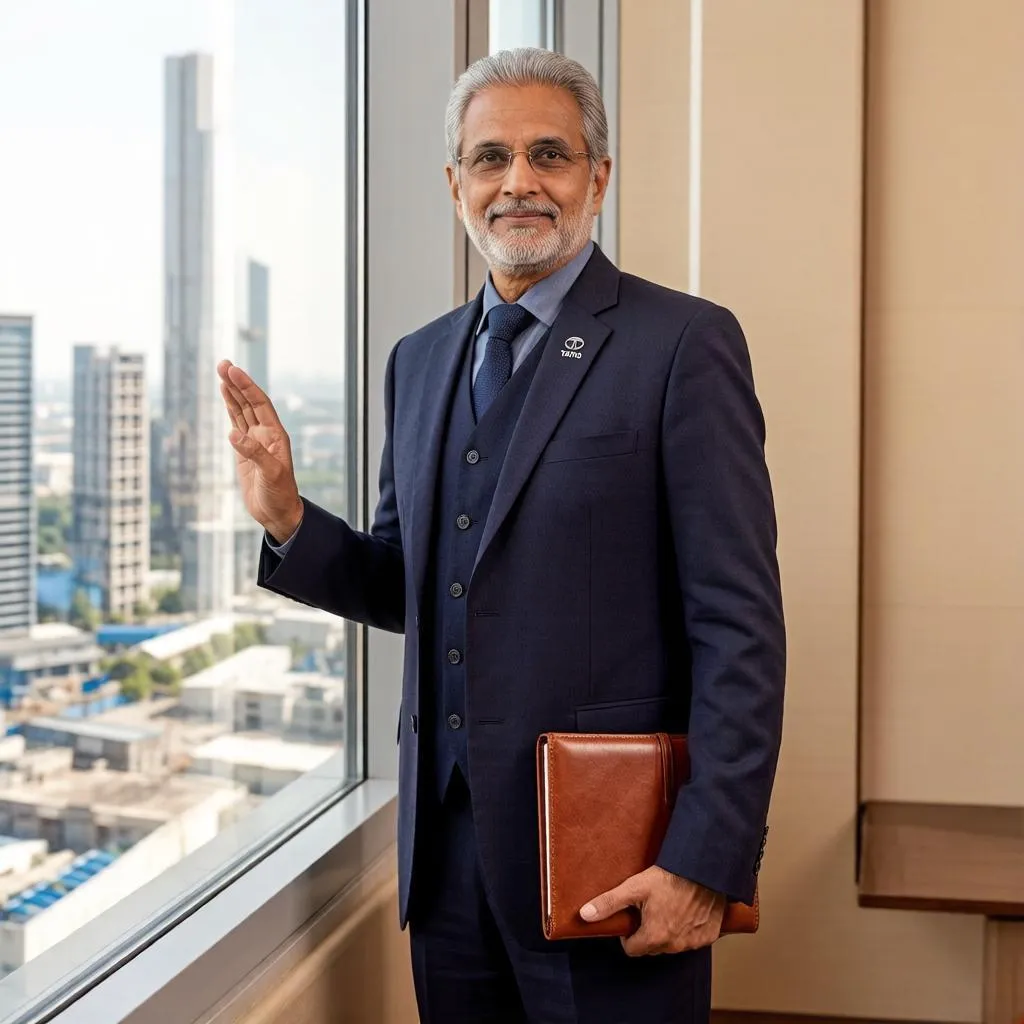
When Ratan Naval Tata died in October 2024 at the age of 86, India did not just lose a businessman; it lost the person most responsible for the way the world sees Indian industry. He took over a conglomerate best known for textiles, hotels and trucks and transformed it into a global group spanning steel, software, cars, telecommunications and consumer brands — worth well over $100 billion when he stepped down. Yet his story is stranger than a typical tycoon’s: a shy architecture graduate who began his career on a shop floor in Jamshedpur, was nearly sidelined by the old guard, and then outlasted every one of his critics. Understanding how he did it — and what he chose to do with the money — is the story of modern Indian industry in miniature.
Early life: a childhood shaped by separation
Ratan Tata was born on December 28, 1937, in Bombay, into the family that had founded one of India’s earliest industrial houses. His parents, Naval and Sooni Tata, separated in the mid-1940s, and Ratan and his younger brother Jimmy were raised by their grandmother, Navajbai Tata, in the family’s Tata Palace home. The separation left a quiet but lasting mark; friends later recalled a reserved boy who learned early to keep his own counsel.
His education followed an unusual path for an Indian industrial heir. He studied at Campion School and Bishop Cotton School in India, then at Cornell University in the United States, where he earned a degree in architecture with structural engineering in 1962. He later completed the Advanced Management Programme at Harvard Business School in 1975. The American years gave him two things that would define his career: a designer’s instinct for product detail, and an outsider’s patience with institutions that needed to change slowly.
The shop floor years and a slow rise
Against every expectation for a scion of the family, his first job at Tata group companies was not in the boardroom. In 1962 he joined Tata Engineering and Locomotive Company (Telco, the ancestor of Tata Motors) in Jamshedpur, working on the shop floor alongside operators and learning the dust and rhythms of manufacturing before anyone thought to hand him a title. He moved through the group’s companies over the next decade — managerial positions at Tata Industries, then the chairmanship of the board at National Radio and Electronics (Nelco) in 1971, a struggling electronics firm he attempted to revive with limited success.
By 1981 he had become chairman of Tata Industries, the group’s promoter arm, but real power remained with his uncle J.R.D. Tata, the beloved patriarch who had led the group since 1938. The succession was contested: many within the group preferred other candidates and openly doubted that the quiet, American-trained nephew had the temperament to run an empire. In 1991, at J.R.D.’s retirement, Ratan Tata took over as chairman of Tata Sons — just months before India’s economic liberalisation blew open the closed market the group had grown comfortable in.
The rebuild: from family fiefdoms to one group
The Tata he inherited was less a company than a loose federation of autonomous firms, each run by powerful chieftains who guarded their independence. Ratan Tata’s first decade as chairman was a political battle as much as a business one. He pushed for the group brand to mean something — common standards, shared strategy, retirement ages that applied to everyone, and consolidation of businesses that overlapped. Veteran executives resisted; some left acrimoniously. By the late 1990s, the man once considered a caretaker had won, and the group began shedding unprofitable ventures and raising its ambitions.
The results reshaped Indian business. Under his watch came launches and moves that few in India had imagined: Indica, the first Indian-designed passenger car, in 1998; Tata Consultancy Services restructured and taken public in 2004 in what was then the country’s largest IPO; and the audacious international acquisitions that turned a national champion into a global player. The centrepiece was the 2007 purchase of Anglo-Dutch steelmaker Corus for about $12 billion, then the largest overseas acquisition ever by an Indian company, followed months later by the $2.3 billion buyout of Jaguar Land Rover from Ford.
The acquisitions that changed the game
The deal-making of the 2000s deserves its own ledger, because it redefined what Indian companies believed they could do:
- Tetley Tea (2000). The $450 million purchase of the British tea giant put a Tata company ahead of every rival in the global tea business and set the template for cross-border ambition.
- Daewoo Commercial Vehicles (2004). The Korean truck maker gave Tata Motors heavy-vehicle technology and its first manufacturing beachhead abroad.
- Corus (2007). The $12 billion steel takeover briefly made the Tata group one of the world’s top ten steel producers overnight.
- Jaguar Land Rover (2008). Bought from Ford when Jaguar was dying; within a few years JLR was the profit engine of Tata Motors and a global luxury brand under Indian ownership.
Not every bet succeeded, and honesty demands saying so: the corus and JLR deals carried crushing debt into the global financial crisis, Tata Nano — the “people’s car” launched in 2008 — never found commercial traction despite his personal conviction, and the 2012 exit of his successor Cyrus Mistry years later triggered a public and legal battle over group governance that shadowed his later years. But the direction held: the group’s revenues multiplied several times over his tenure, and its overseas share of income, negligible when he took over, grew past half of the total.
The chairman’s years in numbers
The arc from 1991 to 2012 is best seen as a single ledger of transformation, where each line captures a different dimension of the rebuild:
| Measure | Around 1991 | Around 2012 (his exit as chairman) |
|---|---|---|
| Group revenue | Roughly ₹14,000 crore | Well over ₹4,50,000 crore |
| Overseas share of revenues | Minimal, a few percent | More than half of group income |
| Global acquisitions | None of scale | Tetley, Daewoo CV, Corus, JLR and others |
| Flagship car | Trucks and utility vehicles | Indica, Indigo, Nano, Vista |
| TCS | Unlisted group division | India’s most valuable listed company |
The transformation was not only about scale. It established a precedent Indian business still lives by: that a house older than a century could reinvent itself without abandoning the values printed on its letterhead. When he formally retired in December 2012, at the mandatory age of 75, he retained the honorary title of chairman emeritus and, more importantly, the trust of the group’s charitable owners.
The philanthropist: where most of the money went
The most distinctive chapter of Ratan Tata’s life is the one that never appeared on any profit-and-loss statement. Roughly two-thirds of Tata Sons’ equity is held by philanthropic trusts, a structure created by his great-grandfather Jamsetji Tata and guarded carefully ever since. Under Ratan Tata’s stewardship and in his later years through Tata Trusts and his personal investments, the flow of money toward public good reached enormous proportions. The Covid-19 pandemic saw the Tata group and trusts commit ₹1,500 crore to India’s emergency response, including ventilators, oxygen infrastructure and vaccine-support funding. Education, rural livelihoods, cancer care networks, water access and animal welfare — he was famously devoted to dogs — all drew sustained backing through the trusts and his personal chequebook.
In his final decade he also became one of India’s most active startup investors, backing dozens of young companies from e-commerce to electric mobility, often with modest cheques and hands-off mentorship. The image of India’s most famous industrialist taking early-stage bets on twenty-something founders became one of the defining business stories of the 2010s.
The honours and the quiet habits
Recognition followed the work: the Padma Bhushan in 2000 and the Padma Vibhushan, India’s second-highest civilian award, in 2008, along with honorary doctorates from universities across the world and the title Knight Commander of the Order of the British Empire. What made him unusual among billionaires was how little the lifestyle advertised. He flew his own aircraft, drove himself around Mumbai in modest cars, lived in a relatively simple sea-facing apartment in Colaba he had occupied for decades, and answered messages from strangers with a courtesy that went viral every time it surfaced. He never married, and he spoke about it without regret, saying he had come close several times but circumstance had moved otherwise.
The signature habits worth remembering:
- He answered people, not just emails. Employees, students and small business owners told of replies from his personal account that arrived within days — behaviour almost unheard of at his level.
- He kept the designer’s eye. He personally reviewed product details, from car interiors to hotel tea sets, believing that respect for the customer begins with respect for the object.
- He treated animals as stakeholders. His末 years revolved partly around stray-dog welfare initiatives, including a dedicated small animal hospital in Mumbai opened shortly before his death.
- He defended the idea of the firm over the man. His governance battles were fought, by his account, for the principle that the group belonged to its trusts and its purpose, not to any individual — including himself.
Death and the aftermath
Ratan Tata died on October 9, 2024, at Breach Candy Hospital in Mumbai, days after being admitted for age-related health conditions. His passing triggered an outpouring that went far beyond business pages: state honours for the funeral in Worli, tributes from heads of government and industry across the world, and crowds of ordinary citizens filing past to pay respects. The boardroom question of succession at Tata Sons — already answered years earlier by Natarajan Chandrasekaran — moved to the trusts themselves, where leadership of the philanthropic empire he steered became the next chapter of the family’s story.
Why his legacy outlasts the numbers
A biography of Ratan Tata ultimately comes down to a single argument: that trust, once built, compounds better than capital. He ran a conglomerate whose controlling shares belonged to charity, expanded it across continents, survived bruising public disputes, and ended his life with more public goodwill than any Indian industrialist in living memory. The buildings, the brands and the balance sheets matter, but the deeper asset he left behind is a template — proof that scale and decency can occupy the same boardroom, that a shy man can lead an empire, and that a company’s reputation is simply the sum of promises kept over a very long time. Modern Indian industry looks the way it does largely because one architect-turned-chairman kept drawing it that way, patiently, for half a century.